By Martin Harris.
4 Inch vs 6 Inch Dust Collection Duct
Use 6 inch duct for your main line when your collector can deliver about 600 CFM or more through the finished system. Use 4 inch duct when you run a 1 HP collector or a short hose from a portable unit. A 6 inch pipe holds 2.25 times the air of a 4 inch pipe, which is great with a big collector and a problem with a small one, because the air slows down and dust settles in the pipe.
The rest of this page shows the math, using published numbers from Oneida, Spiral Manufacturing, OSHA, and Bill Pentz. Duct size is one part of the larger layout questions on my dust collection ductwork guide, so start there if you haven't planned your runs yet.
Area: a 6 inch pipe holds 2.25 times the air
Pipe area grows with the square of the diameter. A 4 inch round duct has about 12.6 square inches inside. A 6 inch duct has about 28.3 square inches. That is 2.25 times the space for air, from a pipe that is only 1.5 times wider.
Area matters because of one formula: CFM equals FPM times the duct area in square feet. CFM is cubic feet per minute, the volume of air. FPM is feet per minute, the speed of that air. The table shows how much air each size carries at two speeds.
| Duct | Area (sq in.) | Area (sq ft) | CFM at 3,000 FPM | CFM at 4,000 FPM |
|---|---|---|---|---|
| 4 in. | 12.6 | .0873 | 262 | 348 |
| 5 in. | 19.6 | .1364 | 409 | 546 |
| 6 in. | 28.3 | .1963 | 589 | 784 |
4,000 FPM column from Spiral Manufacturing's CFM by pipe diameter table. 3,000 FPM column uses the same formula, CFM = FPM × area.
Bill Pentz's ducting page gives nearly the same figures for a 1.5 HP collector: about 350 CFM through 4 inch duct, about 550 through 5 inch, and about 785 through 6 inch. He also notes that reaching 1,000 CFM for fine dust takes a total opening area equal to a 7 inch duct.
Air speed: why bigger duct can work worse
Dust only stays in the airstream if the air moves fast enough. That minimum speed is called transport velocity. The sources give slightly different numbers:
- OSHA: about 2,500 to 4,000 FPM for sawdust, chips, and shavings.
- Bill Pentz: at least 2,800 FPM in horizontal runs and 3,800 FPM in vertical runs, with design targets of 3,000 and 4,000.
- Spiral Manufacturing: 4,500 FPM in branches and 4,000 FPM in mains for woodworking dust.
Now put a real collector in the pipe. Woodcraft's one man shop article measured a 1 HP collector at about 420 CFM through 6 feet of 4 inch flex. Here is how fast 420 CFM moves in each duct size:
- 4 inch: about 4,810 FPM. Fast enough by every source above.
- 5 inch: about 3,080 FPM. Fine for horizontal runs, slow for a vertical riser.
- 6 inch: about 2,140 FPM. Below OSHA's low end and below the Pentz horizontal minimum.
A bigger pipe would let that collector move a little more air, since resistance drops. It still can't fill a 6 inch pipe. To keep 3,000 FPM in 6 inch duct you need about 589 CFM, and 784 CFM to reach 4,000 FPM. If your collector can't deliver that, dust settles in the low spots, the pipe partly clogs, and airflow drops further.
Pressure loss: where 4 inch costs you
Resistance to airflow is called static pressure, measured in inches of water column (in. w.c.). Here are Oneida's published losses for the two sizes:
| Component | 4 in | 6 in |
|---|---|---|
| 5 ft rigid duct | .285 | .185 |
| 1 ft flex hose | .280 | .180 |
| 90° elbow | .450 | .564 |
| 45° elbow | .225 | .282 |
| 45° wye | .375 | .329 |
Values in in. w.c. Source: Oneida Air Systems static pressure component data, measured at approximately 4,000 FPM and sea level.
Read this table carefully. Every value was measured with air moving at about 4,000 FPM. At that speed, the 6 inch pipe carries 784 CFM and the 4 inch carries 348. So the 6 inch duct moves 2.25 times the air and still loses less per foot. The elbows look worse at 6 inch only because they are handling far more air.
Now try to push that same 784 CFM through 4 inch duct. The air would need to move about 9,000 FPM. Bill Pentz's static pressure notes use the formula velocity pressure = (FPM ÷ 4,005) squared. At 9,000 FPM that gives about 5 in. w.c., compared with about 1 at 4,000 FPM. Friction in duct and fittings scales with that number, so the losses would be roughly five times higher. This is the core of Oneida's advice on duct diameter: a small pipe chokes a collector that could move much more air.
Which size fits your collector
- 1 HP portable collector, one hose. Stay with 4 inch. Keep the collector close to the tool and roll it from machine to machine. Woodcraft measured a 1 HP unit at less than 300 CFM through a 25 foot run, so long ducting is a poor fit for this class.
- 1.5 to 2 HP single-stage with a short main. A 5 inch main with 4 inch drops is a good match. Woodcraft measured a 2 HP single-stage collector at 570 CFM through about 25 feet of metal duct. That airflow fits 5 inch duct well and sits right at the edge of what 6 inch needs.
- Collectors that deliver 600 CFM or more through your system. Run a 6 inch main. Woodcraft's central system design guide describes a layout with a 6 inch main, 5 inch branches to larger machines, and 4 inch branches to smaller tools.
- Aiming for fine dust capture near 1,000 CFM. You are past 6 inch. Pentz's area math points to 7 inch, and a collector sized for it.
Not sure which class you're in? My 1 HP vs 2 HP dust collector comparison covers measured airflow by size, and my static pressure loss calculation shows how to estimate what your collector will deliver through your planned duct.
Your tools have 4 inch ports. Does that matter?
Less than you might think. Oneida points out that a tool's port size is often a packaging choice, and the right duct size for the system is often larger. Most table saws, jointers, and planers ship with 4 inch ports, even the ones that need 450 to 550 CFM on my dust collector CFM chart.
The fix is to keep the air in larger duct as long as you can, then step down at the machine. Put the reducer right at the tool, and keep the 4 inch flex hose after it as short as the machine allows. A short 4 inch section costs far less than a long one. Spiral Manufacturing's design steps also call for reducing any port smaller than 3 inches up to 4 inch duct.
Parts and fit
Many hobby shops build duct from PVC sewer and drain pipe, sold as ASTM D2729 pipe at home centers. Bill Pentz recommends it because it costs far less than metal or Schedule 40 PVC. Be aware of one fit issue: 4 inch D2729 pipe has an outside diameter of about 4.215 inches and an inside diameter of about 4.064 inches. Standard 4 inch dust collection hose fittings don't slide straight onto it. Woodworking retailers sell adapters made for S&D pipe.
Before you commit to 6 inch, price out the whole run, including wyes, long sweep elbows, and blast gates, and check that you can buy every fitting in that size. My guide to dust collection fittings lists what you need per branch, and my PVC vs metal dust collection pipe comparison covers the material choice.
The middle option: 5 inch
Most of the 4 vs 6 debate skips 5 inch, and for many garage shops it is the best fit. It carries about 409 CFM at 3,000 FPM and 546 CFM at 4,000 FPM, which lines up with what 1.5 and 2 HP collectors deliver once duct is attached. If your collector lands between the two sizes, a 5 inch main with 4 inch drops keeps the air fast without choking it. For the whole picture, from collector choice to filtration, see my complete guide to small shop dust collection.
Hose in both sizes
 Check price on Amazon
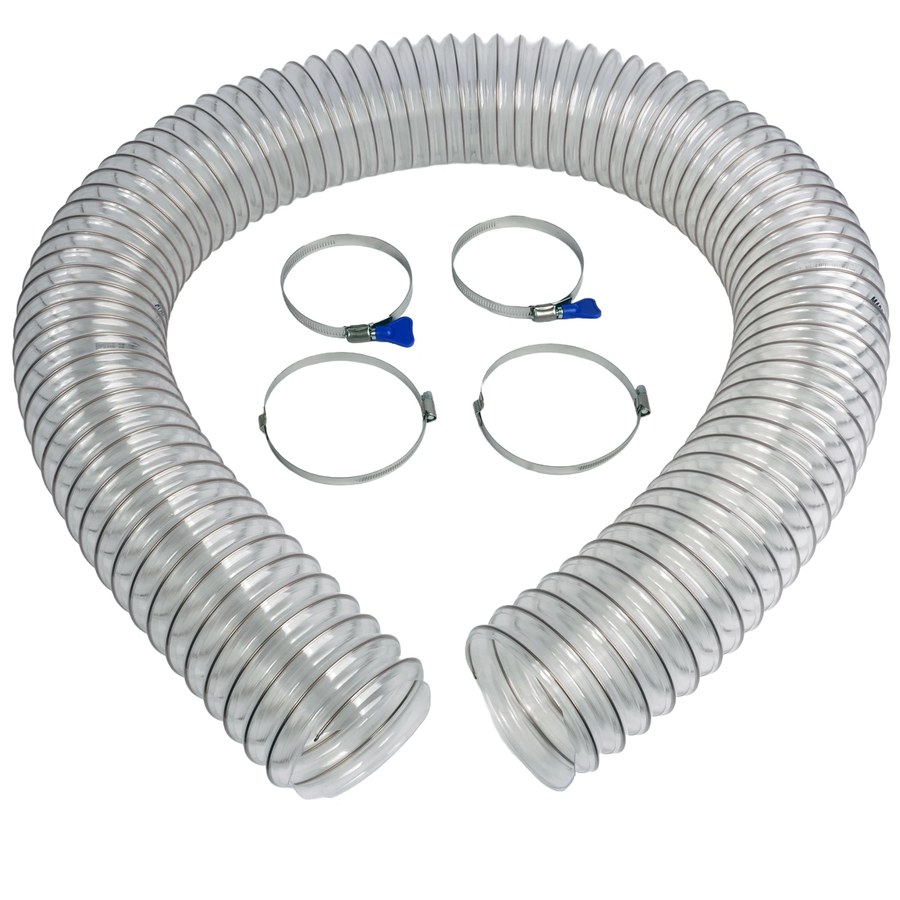
4 in. smooth-wall flex, 6 ft$35
The 4 inch option, which is right for machine drops in most small shops.
 Check price on Amazon
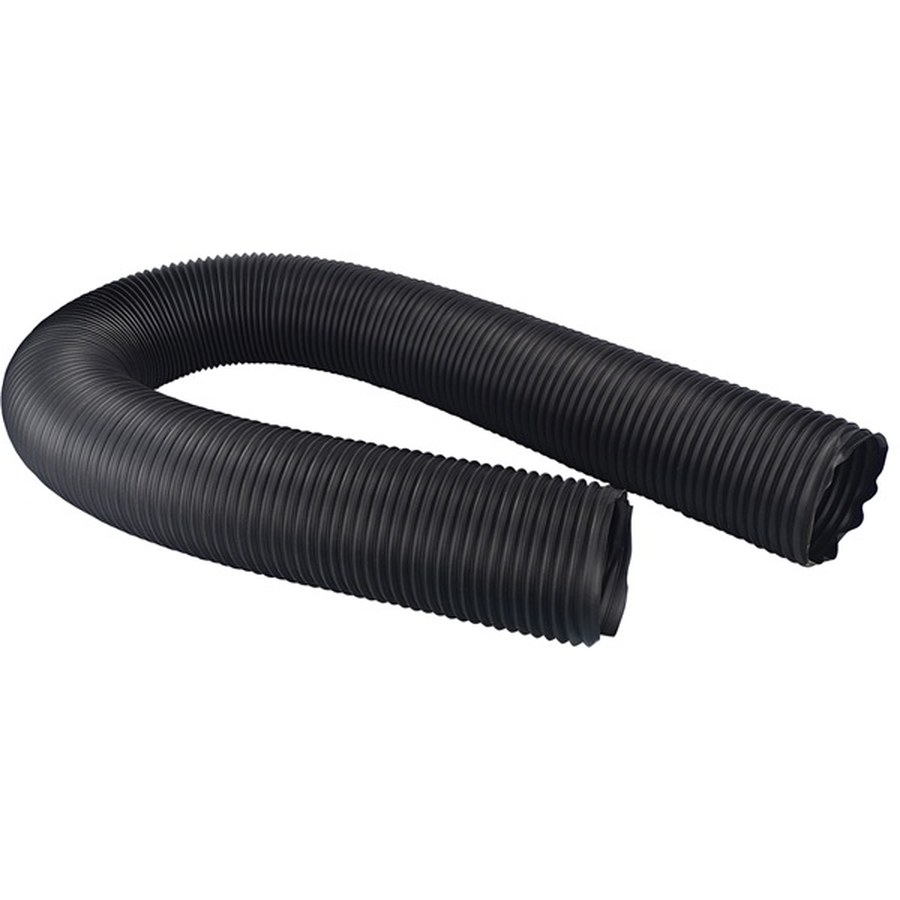
The 5 inch option, for a main that feeds a larger machine without necking down.
 Check price on Amazon
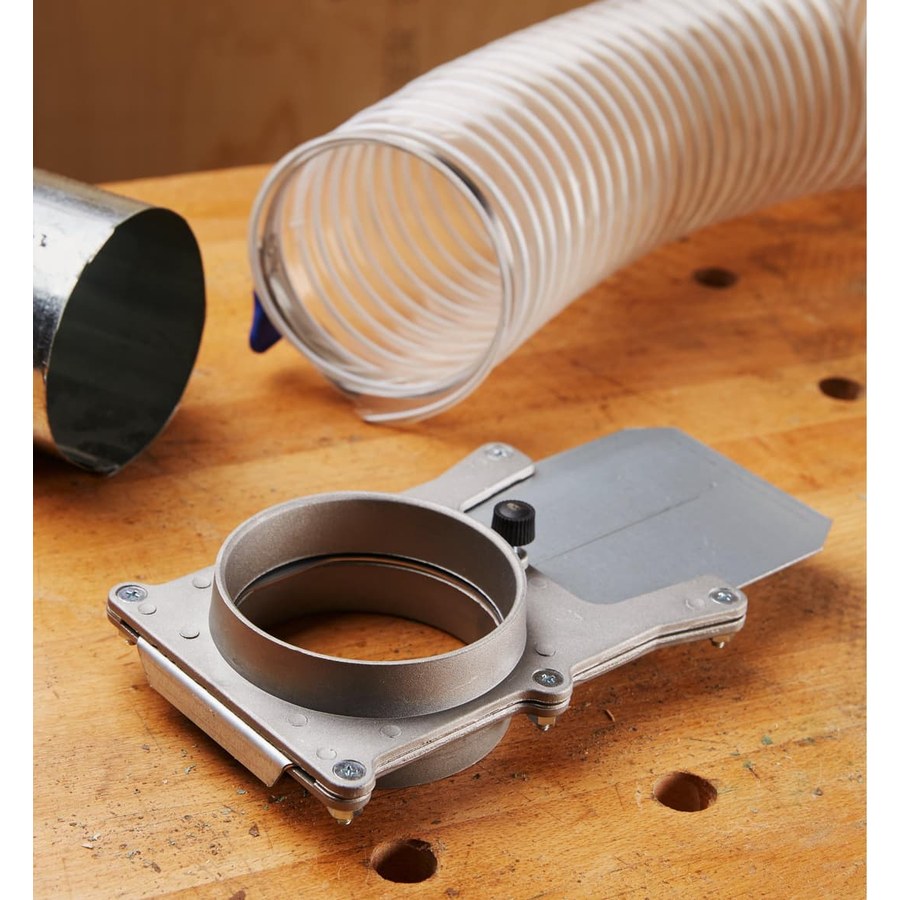
4 in. aluminum self-cleaning gate$35
Match the gate to the duct. Putting a smaller gate in a larger line undoes the whole point of the bigger pipe.
FAQ
Can I use 6 inch duct with a 1 HP dust collector?
I wouldn't. A 1 HP collector measured at about 420 CFM moves only about 2,140 FPM through 6 inch duct. That is below OSHA's 2,500 FPM low end for wood dust, so chips can settle in the pipe. A 4 inch hose or duct keeps the air moving fast enough.
Is 4 inch duct enough for a table saw?
For a single drop, usually yes. A table saw needs about 400 CFM, which moves through 4 inch duct at about 4,580 FPM. That is close to Spiral Manufacturing's 4,500 FPM branch speed. The limit is length: a long 4 inch run adds a lot of resistance.
Does 6 inch duct lose less static pressure than 4 inch?
At the same airflow, much less. In Oneida's table, 5 feet of 6 inch duct loses .185 in. w.c. while carrying 2.25 times the air that 4 inch carries at its .285 loss. Forcing the larger airflow through 4 inch would push losses up several times.
Should I reduce from 6 inch to 4 inch at each tool?
Yes, if the main is 6 inch and the tool has a 4 inch port. Make the step down at the machine, not partway along the branch, and keep the 4 inch flex hose after the reducer as short as you can.