Dust Collection By Tool
Every stationary tool has a different hood, a different port, and a different real CFM requirement. These guides cover setup and sizing tool by tool.
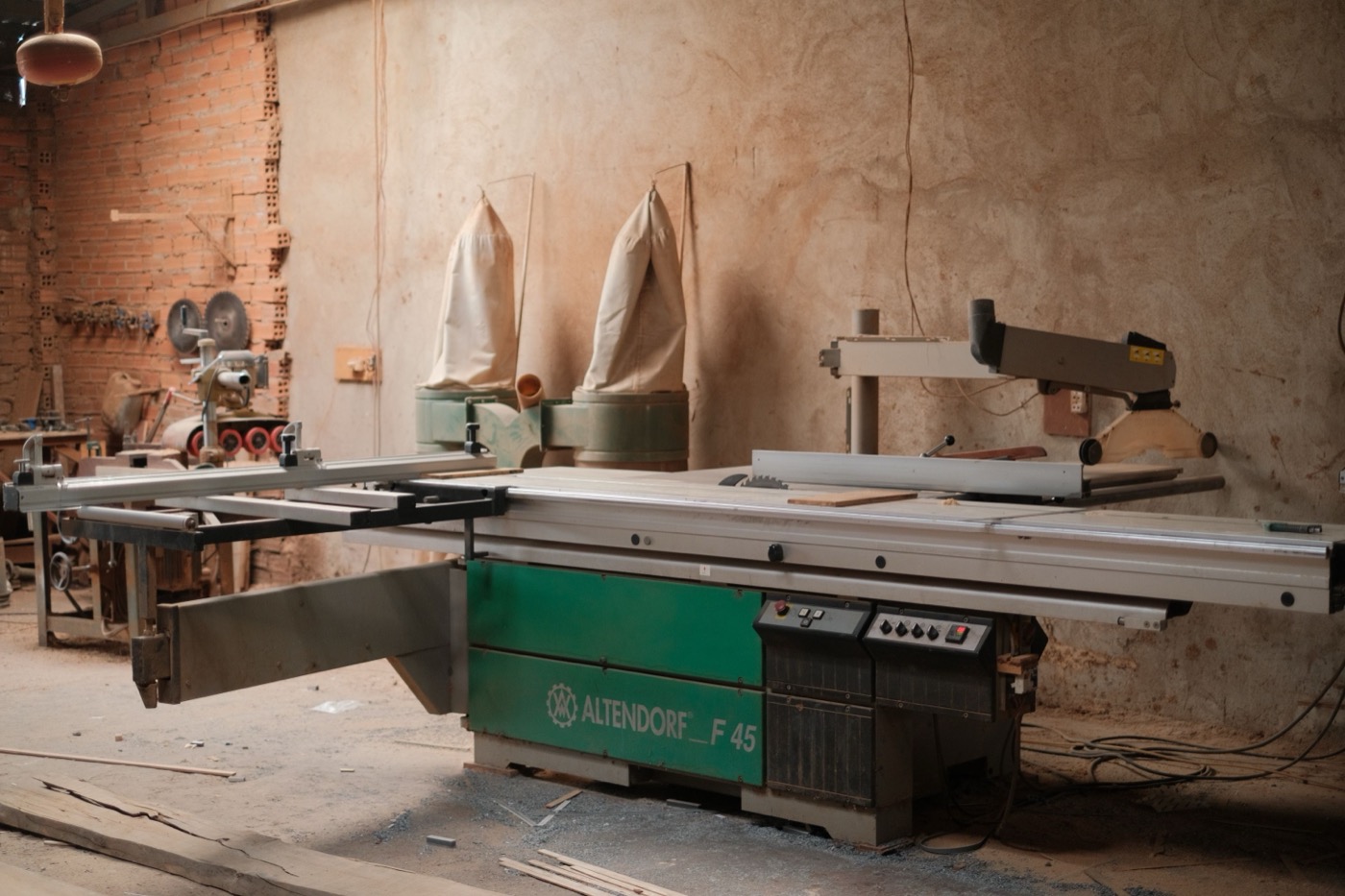 Table Saw Dust Collection
Cabinet and contractor saws, overarm blade guards, and the CFM you actually need at the port.
 Miter Saw Dust Collection
The messiest tool in most shops. Hoods, shrouds, and a real fix for the mess.
 Router Table and CNC Dust Collection
Under-table, above-table, and CNC gantry collection, tested.
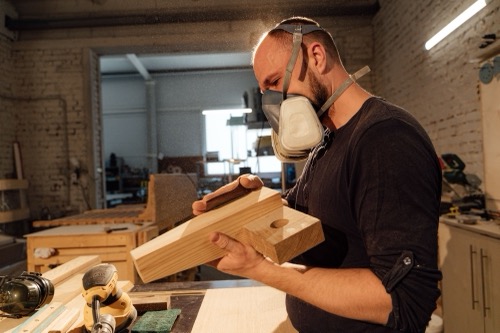 Planer and Jointer Dust Collection
The two highest chip-volume tools in a shop, and why they need the most CFM.
- Lathe Dust Collection
Fine dust and shavings, and where to actually position a hood behind a lathe.
- Bandsaw Dust Collection
Awkward lower-wheel collection, and a few practical fixes.
- Sander Dust Collection
Sanders make the finest, most dangerous dust in the shop. Here is what actually captures it.
- Overarm Dust Collection for Table Saws
Why the cabinet port misses the dust thrown above the blade, and the guards and booms that catch it.
- How to Build a Miter Saw Dust Hood
A plywood hood behind the saw, sized to catch the plume the stock port misses.
- CNC Router Dust Collection and Dust Shoes
Dust shoes, hose routing, and whether a shop vac is enough for a hobby CNC.
- Drum Sander Dust Collection
Port sizes, CFM from the manuals, and why a shop vac usually falls short.
- Spindle Sander Dust Collection
Benchtop spindle sander ports, shop vac setups, and fine dust protection.
Gear that helps on almost any tool
Whatever machine brought you here, these three do the most across all of them.
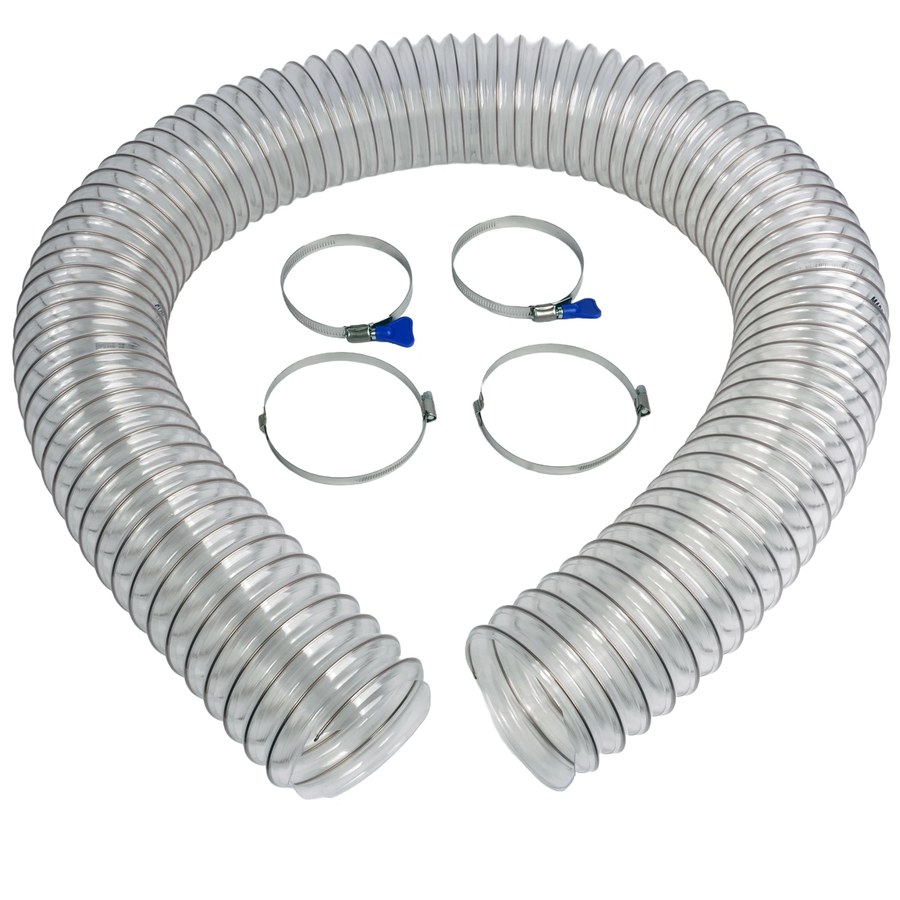 Check price on Amazon
4 in. smooth-wall flex, 6 ft$35
Short smooth wall flex. Long ribbed hose is the most common hidden cause of weak capture at any machine.
 Check price on Amazon
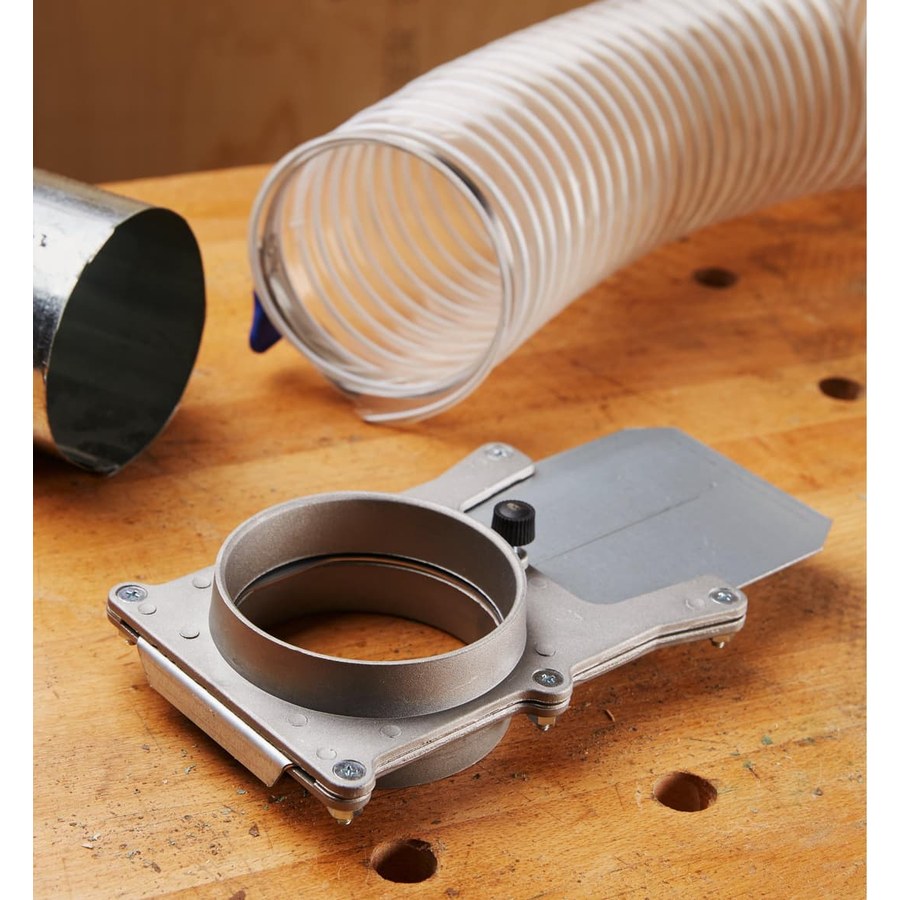
4 in. aluminum self-cleaning gate$35
One gate per drop so the airflow goes to the tool you are actually using.
 Check price on Amazon
JET AFS-1000B ceiling cleaner$660
For the fine dust no port catches, which on handheld tools is most of it.