What Size Dust Collector Do I Need?
Select the tools in your shop. The calculator sizes for your single largest tool, not the sum of all of them, because a blast gate sends full airflow to one machine at a time. Figures are recommended CFM, which includes margin for duct losses and fine dust capture, not just visible chip pickup.
You need at least
0cfm
Select a tool above to see a recommendation.
1 HP vs 2 HP, in plain terms
A 1 HP single-stage collector is rated around 650 CFM by the manufacturer, but delivers closer to 420 CFM through six feet of 4 inch flex hose once real-world losses are accounted for, and less than 300 CFM at 25 feet. A 1.5 HP unit rated near 1,200 CFM tends to deliver roughly 470 to 500 CFM under the same conditions. The gap between the rated number and the delivered number is the single most common source of disappointment when sizing a collector, and it is why this calculator uses recommended, not rated, figures.
Full CFM reference chart
| Tool | Recommended CFM |
|---|---|
| Table saw (cabinet or contractor) | 400 |
| Jointer (6 to 8 inch) | 450 |
| Planer (12 inch) | 450 |
| Planer (15 inch or larger) | 550 |
| Bandsaw | 400 |
| Drum sander | 600 |
| Router table | 350 |
| Lathe | 500 |
| Miter saw | 550 |
| CNC router | 650 |
| Downdraft table | 600 |
These are recommended, not bare minimum, figures, cross-checked against Oneida's and Woodcraft's published sizing guidance. Your actual duct run, number of elbows, and hood design will shift the real number. When in doubt, size up, since a collector that is slightly oversized is a minor cost, and one that is undersized never catches fine dust properly no matter how the ductwork is tuned.
Why the number on the box is not the number at your tool
Manufacturers quote airflow with nothing attached to the inlet. No duct, no hose, no filter resistance, no hood. The moment you connect a real system the figure falls, and it falls further than most people expect. Here is that gap across the collectors on this site, using the same figures published in each review.
| Collector | Claimed CFM | Delivered at the tool | Shortfall |
|---|---|---|---|
| Grizzly G0548ZP 2 HP canister | 1700 | 610 | 64% |
| Shop Fox W1666 2 HP bag | 1550 | 585 | 62% |
| Harbor Freight 2 HP, stock bag | 1550 | 575 | 63% |
| Laguna C|Flux 1.5 cyclone | 1314 | 485 | 63% |
| Delta 50-767 1.5 HP canister | 1200 | 515 | 57% |
| Oneida 1.5 HP two-stage cyclone | 1200 | 475 | 60% |
| JET DC-1100VX 1.5 HP canister | 1100 | 505 | 54% |
Every one of them loses between half and two thirds of its headline figure. That is not a defect, it is what happens when you put air through pipe. It does mean the box number is useless for sizing, and it is why the calculator above works in delivered figures rather than rated ones.
The practical rule that follows: a collector whose claimed figure matches your requirement will not meet it. Look for a claimed figure roughly double what you need, or better, look for a delivered figure measured through a real duct run.
Can you size by the size of the shop?
People ask what collector suits a two car garage, and it is an understandable question with an unhelpful answer. Floor area tells you almost nothing about what you need. A two car garage with a lathe and a bandsaw needs around 500 CFM. The same garage with a 15 inch planer needs 550, and with a drum sander 600 or more. The machines set the requirement, not the room.
Shop size does matter for two other decisions. It sets how long your duct runs are, and longer runs cost pressure, which my pressure loss walkthrough works through. And it decides whether you want ambient filtration on top of source capture, because a small closed room concentrates whatever escapes the hood. Neither changes the CFM figure you size the collector to.
What horsepower actually tells you
Less than the label suggests. Horsepower describes the motor, not the air. Two collectors at the same rating can deliver meaningfully different airflow depending on impeller diameter, housing design, and filter area. Look at the table above: the 2 HP Grizzly and the 2 HP Shop Fox land within 25 CFM of each other, but the 1.5 HP Laguna cyclone delivers less air than either while pulling considerably higher static pressure, because a cyclone trades airflow for keeping the filter clean.
Treat horsepower as a rough bracket rather than a specification. Below about 1.5 HP you are limited to one small port tool at a time. Around 2 HP covers a single machine with a 4 inch port and a short run comfortably. Above that you are buying the ability to run longer duct, bigger pipe, or a cyclone stage, rather than simply more air at the hood.
The duct decides as much as the collector
A collector can only move what the pipe will carry. At the 4,000 feet per minute you want in a branch to keep chips moving, 4 inch duct carries about 348 CFM, 5 inch about 546, and 6 inch about 784. Read that against the calculator. If your largest tool asks for 550 CFM and the whole system is 4 inch, the duct is the ceiling and no collector will get you there.
This is the most common expensive mistake in a small shop. People upgrade the collector, see almost no change at the tool, and conclude the new machine is faulty. The bottleneck was the pipe. Size the duct and the collector together, which my 4 inch vs 6 inch guide covers.
Four ways people get this wrong
Adding up every tool. You run one machine at a time with the other gates shut, so the total is irrelevant. Size for the single largest. The exception is a tool with two pickups, like a table saw with an overarm guard, where both ports are open together.
Sizing to the minimum rather than the recommended figure. Minimum figures catch visible chips. The gap between minimum and recommended is roughly where fine dust capture lives, and fine dust is the part that matters for your lungs.
Forgetting the tool you are about to buy. If a planer or a drum sander is anywhere in your plans, size for it now. Replacing a collector costs far more than buying one bracket up at the start.
Ignoring the filter. Airflow and filtration are separate problems. A collector can hit your CFM figure and still put fine dust back into the room through a coarse bag. Budget for the filter as part of the collector, not as an upgrade for later.
Collectors that fit these numbers
Once you know the CFM you need, these are the three I would actually shortlist.
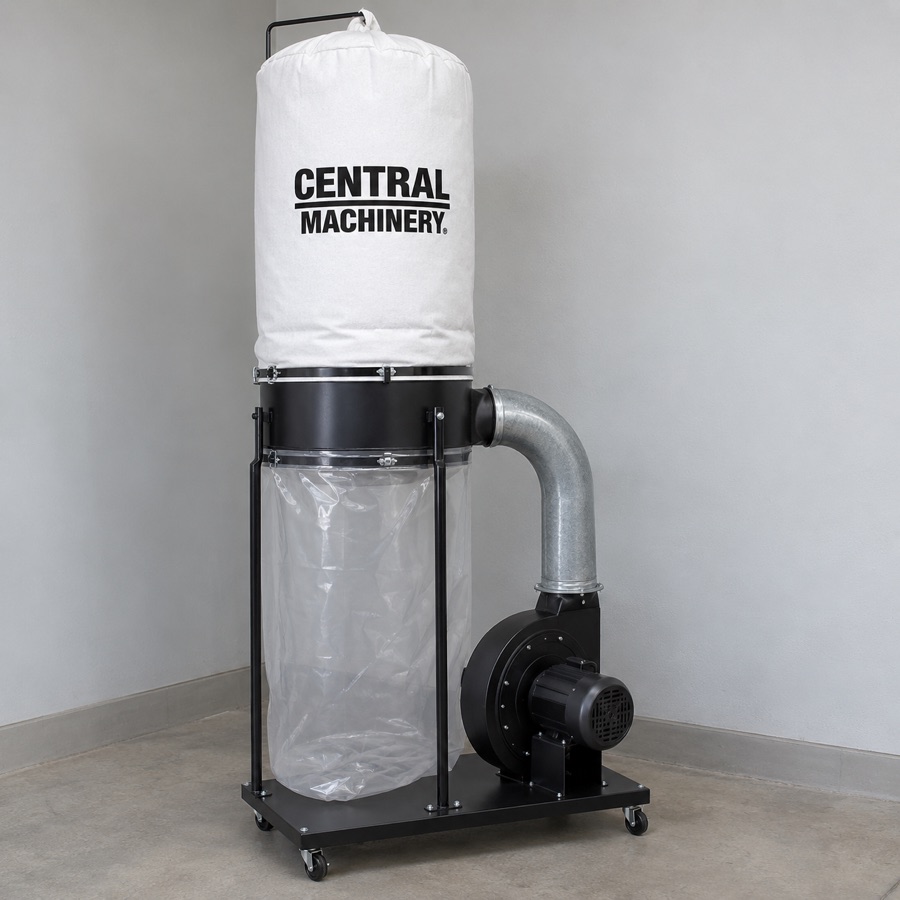 Check price on Harbor Freight
Harbor Freight 2 HP, stock bag$300
The cheapest way into a full size collector and the airflow holds up, but budget for a filter upgrade because the stock bag is the weak point.
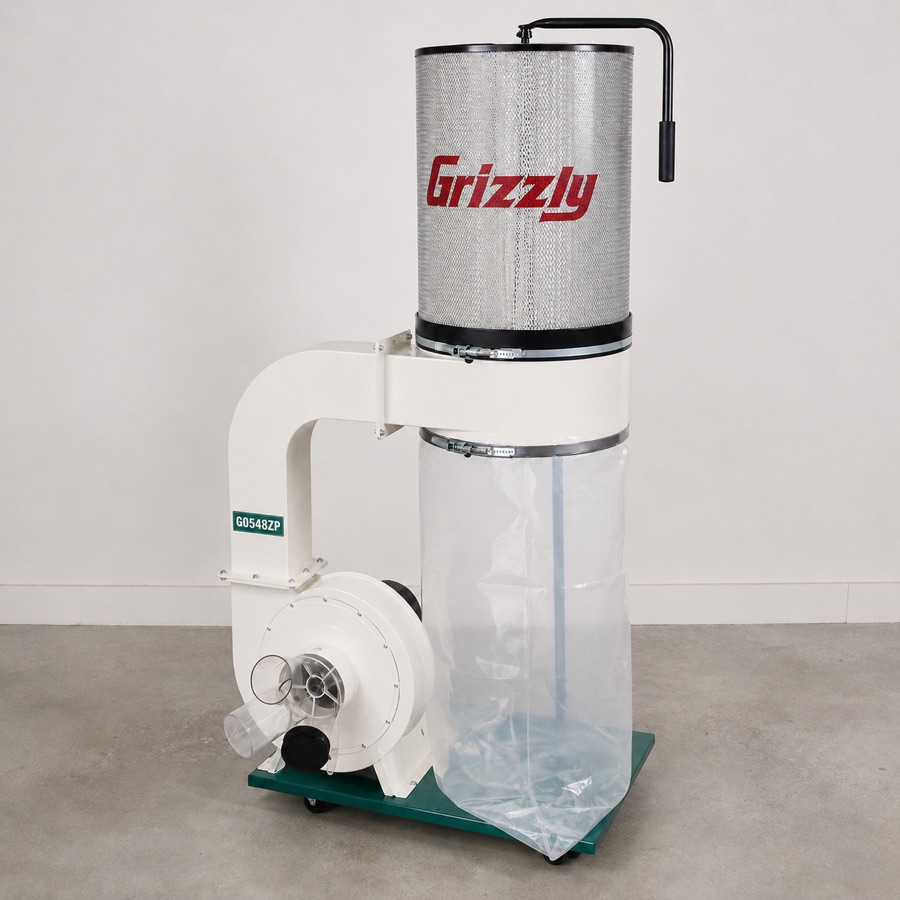 Check price on Grizzly
Grizzly G0548ZP 2 HP canister$755
A 2 HP canister unit, the usual answer for a one or two machine shop that wants real fine dust control without a cyclone.
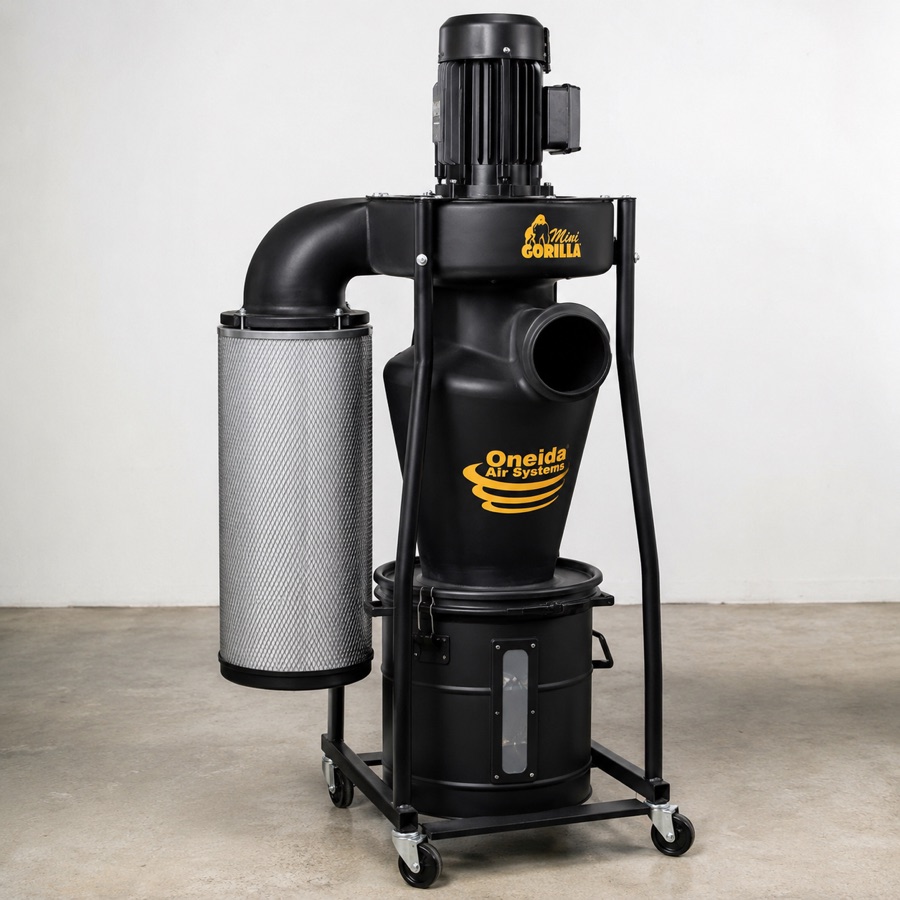 Check price on Oneida Air Systems
Oneida 1.5 HP two-stage cyclone$1999
Step up to two stage if you run a planer or a drum sander and want the filter to stay clean between cleanings.
FAQ
What size dust collector do I need for a home shop?
Size to your single largest tool, not the total. For most home shops that lands between 400 and 600 CFM delivered, which in practice means a 2 HP class collector. A shop with a 15 inch planer or a drum sander sits at the top of that range.
Is 1 HP enough for a small shop?
For one small port tool at a time, yes. For a table saw, jointer or planer, no. A 1 HP unit rated near 650 CFM delivers closer to 420 through six feet of 4 inch flex, and under 300 at 25 feet, which is below what those machines need.
Do I add up the CFM of all my tools?
No. With blast gates you run one machine at a time, so the collector only has to satisfy the largest single requirement. Adding them up leads people to buy two or three times the machine they need.
Why does my collector move less air than the box says?
Because the box figure is measured with nothing attached. Across the collectors on this site the delivered figure runs between half and two thirds below the claimed one once duct, hose and filter are in the way. That gap is normal and should be planned for.
Should I size up if I am between two options?
Yes. A slightly oversized collector costs a little more to buy and run. An undersized one never captures fine dust properly no matter how well you tune the ductwork, and the only fix is replacing it.