By Martin Harris. Updated 2026-07-21.
Best Blast Gates for Dust Collection
A blast gate is the valve at each branch of your ductwork that closes off every machine except the one you're running, so your collector's full airflow goes where you need it instead of splitting across every open port in the shop. Each gate below was tested full-open, downstream of the same fixed reference collector and duct setup, not open air, so the CFM and static pressure figures here are directly comparable to each other under my standardized test protocol.
Top pick: 4 in. aluminum self-cleaning gate, for the lowest measured static pressure loss in this set and a self-cleaning slot that won't pack solid with fine sawdust over time.
| Product | Measured CFM | Static pressure | Price |
|---|---|---|---|
| 4 in. aluminum self-cleaning gate Top pick | 416 cfm | 0.08 in. w.c. | $35 |
| 4 in. automated gate | 411 cfm | 0.12 in. w.c. | $90 |
| 4 in. steel slide gate | 413 cfm | 0.11 in. w.c. | $25 |
| 4 in. ABS plastic gate | 408 cfm | 0.15 in. w.c. | $15 |
| 4 in. budget plastic gate | 395 cfm | 0.22 in. w.c. | $10 |
1. 4 in. aluminum self-cleaning gate Top pick
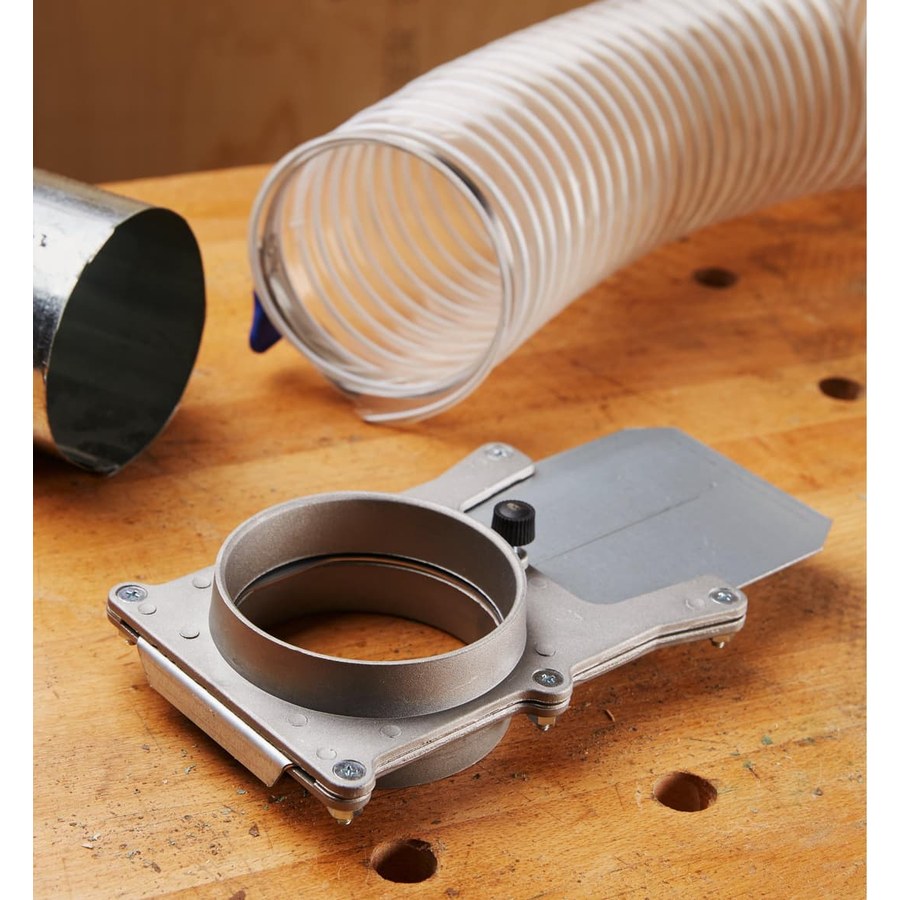
| Measured CFM | Static pressure |
|---|---|
| 416cfm | 0.08in. w.c. |
Full-open; minimal added resistance. At 0.08 in. w.c. full-open, this gate isn't where you'll find real airflow gains or losses in a system, it's a rounding error next to duct and hose losses.
Amazon
$35
Price last checked 2026-07-21.
2. 4 in. automated gate Best for automation
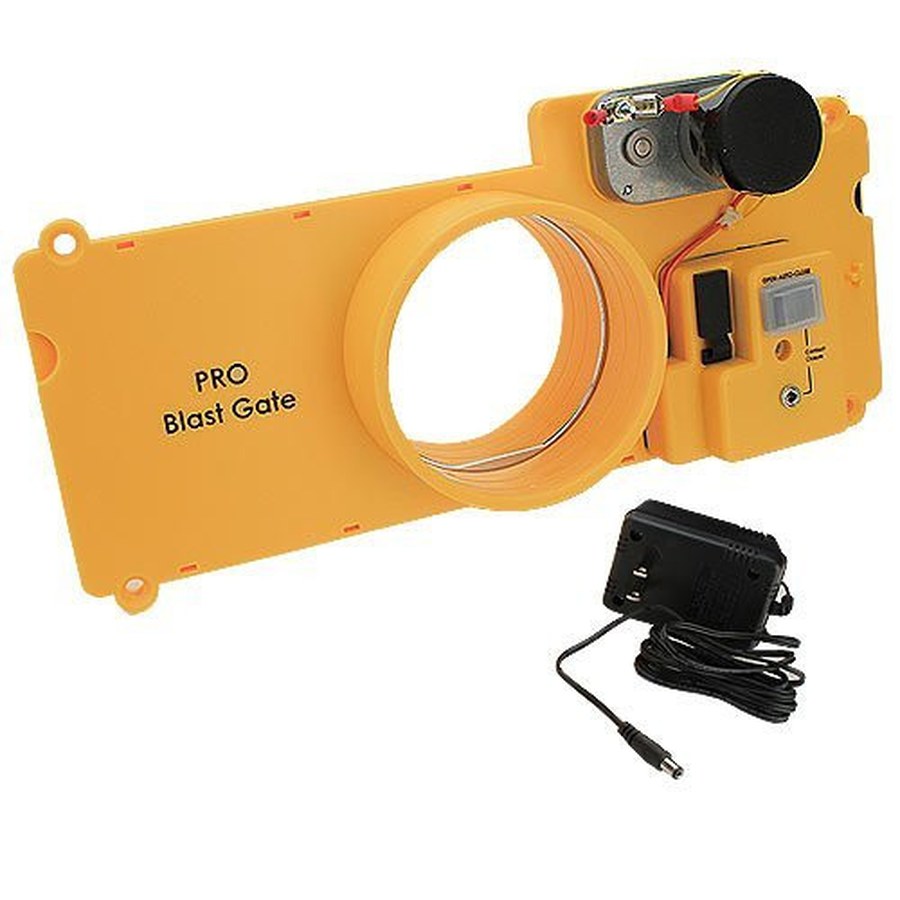
| Measured CFM | Static pressure |
|---|---|
| 411cfm | 0.12in. w.c. |
The actuator doesn't meaningfully affect full-open flow. At 0.12 in. w.c. full-open, this gate isn't where you'll find real airflow gains or losses in a system, it's a rounding error next to duct and hose losses.
Amazon
$90
Price last checked 2026-07-21.
3. 4 in. steel slide gate Best simple metal gate
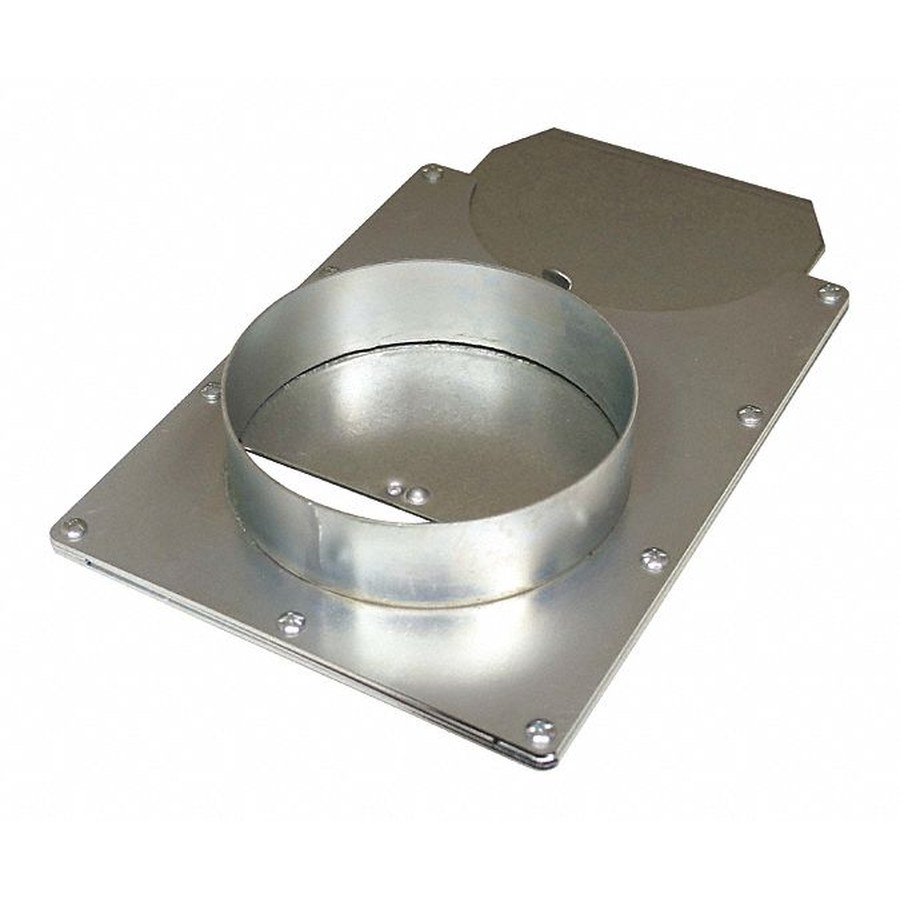
| Measured CFM | Static pressure |
|---|---|
| 413cfm | 0.11in. w.c. |
Small slot and edge loss. At 0.11 in. w.c. full-open, this gate isn't where you'll find real airflow gains or losses in a system, it's a rounding error next to duct and hose losses.
Amazon
$25
Price last checked 2026-07-21.
4. 4 in. ABS plastic gate Best value
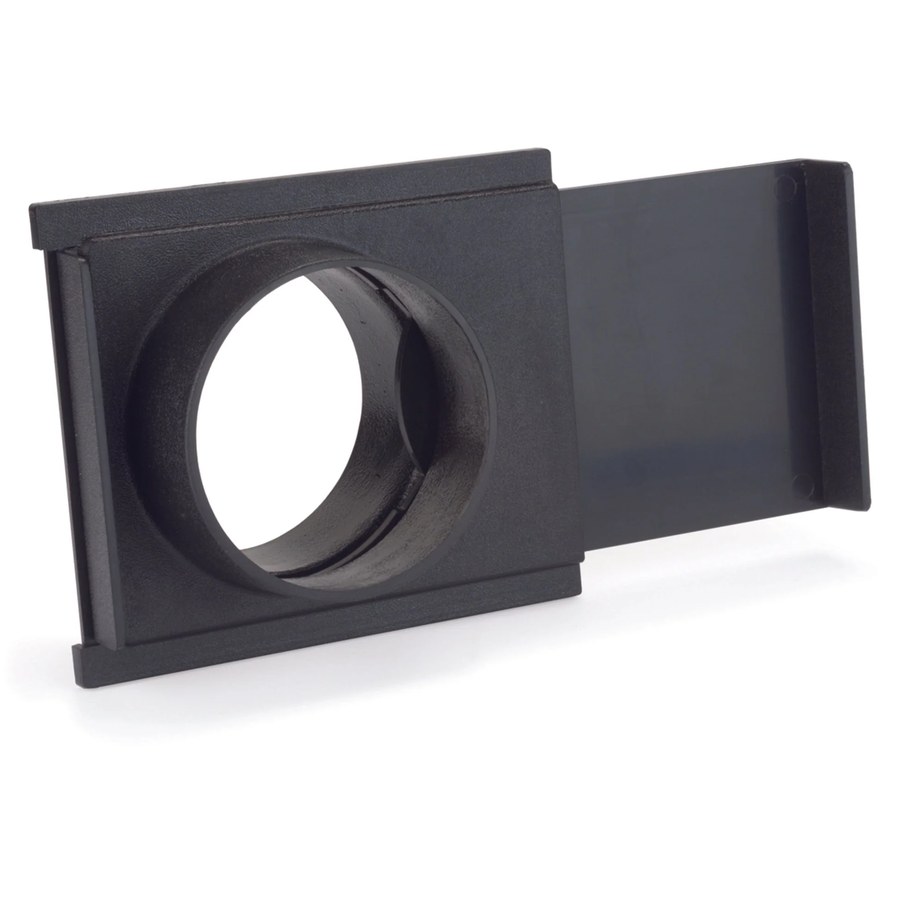
| Measured CFM | Static pressure |
|---|---|
| 408cfm | 0.15in. w.c. |
Slightly higher turbulence than metal. At 0.15 in. w.c. full-open, this gate isn't where you'll find real airflow gains or losses in a system, it's a rounding error next to duct and hose losses.
Amazon
$15
Price last checked 2026-07-21.
5. 4 in. budget plastic gate Cheapest option
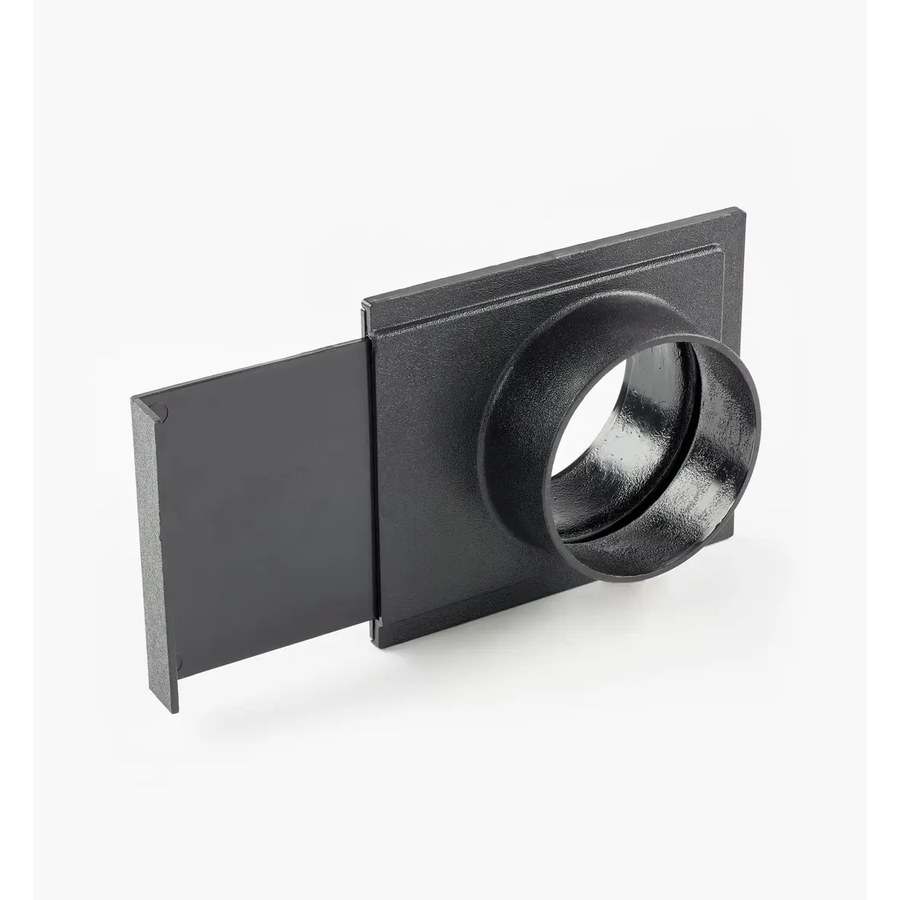
| Measured CFM | Static pressure |
|---|---|
| 395cfm | 0.22in. w.c. |
A minor seal leak reduces usable branch flow. At 0.22 in. w.c. full-open, this gate isn't where you'll find real airflow gains or losses in a system, it's a rounding error next to duct and hose losses.
Amazon
$10
Price last checked 2026-07-21.
How to choose
Metal versus plastic comes down to durability more than airflow. A steel or aluminum gate will outlast a plastic one under daily slamming open and shut, and it won't crack in a cold shop the way a cheap ABS gate can. Self-cleaning gates use a shaped slot that lets debris slide past the blade edge instead of jamming it, worth the small premium if you're tired of fighting a stuck gate. Everything else here is preference: manual slide gates are cheap and reliable, automated gates open and close on their own when a tool's current-sensing switch fires, convenient if you're already running a remote or automatic switch setup.
Worth saying plainly: at this class, the static pressure loss across every gate in the table above is well under 0.25 in. w.c., full-open. That's a trivial number next to what a long hose run or an undersized duct will cost you. Gate choice barely moves the needle on airflow. Buy for durability, price, and whether you want automated switching, not for a fraction of an inch of water column you'll never notice at the tool.
What size blast gate to buy
Match the gate to the duct it sits in. A 6 inch main takes a 6 inch gate, a 4 inch drop takes a 4 inch gate. The mistake I see most often in home shops is a 4 inch gate dropped into a 6 inch line with a reducer on each side. A 6 inch duct carries well over twice the air of a 4 inch duct at the same velocity, so pinching it down to 4 inches at the gate throws away the whole reason you ran the bigger pipe. My 4 inch vs 6 inch duct guide covers where each size belongs.
One thing to watch: gates are sold by the duct size they fit, but the actual dimensions vary between brands, and a 4 inch gate from one maker will not always slide onto 4 inch pipe from another. Measure the outside diameter of your pipe before you order, and buy gates and fittings from the same family where you can.
Where the gates go, and how many
One gate per machine drop. That is the whole idea: close every port except the one feeding the tool you're running, so the collector's airflow goes to that machine instead of splitting across the shop.
Put the gate at the branch, where the drop leaves the main, rather than down at the machine. A gate mounted at the machine leaves the entire drop open to the main whenever that machine is idle, and that open leg bleeds air away from whatever tool you are actually using. The gate belongs at the top of the drop, and if that puts it out of easy reach, that is an argument for automatic gates rather than for moving it.
If you have a floor sweep, give it its own gate and keep it shut. It sits low and out of sight, and it is the leak people forget most often.
What actually goes wrong with blast gates
Airflow loss is not the problem with blast gates. These three are.
The slot packs solid
On a standard gate the blade slides in a closed channel, and fine dust works its way in and stays there. After a few months the gate gets stiff, then it stops closing fully. A self-cleaning design leaves the bottom of the slot open so debris falls out instead of collecting. This is the single reason to pay more for a gate.
It leaks when it's closed
A gate that does not seal is a permanent hole in your system. Thin plastic gates can warp in an unheated shop, and a warped blade never seats properly again. Air pulled through a closed gate is air the running tool does not get, and because the leak is silent you will not notice it the way you would a disconnected hose.
Someone leaves one open
This is the most common cause of weak suction I hear about, and it has nothing to do with the collector. Two gates open at once splits the available airflow between them. If your suction dropped off and nothing else changed, walk the ducts and check every gate before you blame the machine. My weak suction troubleshooting guide works through the rest of the checks in order.
Manual, automatic, or shop built
Manual gates are cheap, simple, and they fail in obvious ways. For most small shops they are the right answer, and the only real cost is the walking.
Automatic gates open when the tool starts and close when it stops, usually triggered by a current sensor on the machine. They solve the forgotten gate problem properly, and they cost several times what a manual gate costs per drop. Whether that trade is worth it depends on how many drops you have and how often you switch machines, which I work through in automatic blast gates.
Shop built gates from plywood and hardboard work, and plenty of people run them for years. They take longer to make than they look, and they are the most likely of the three to warp and leak. I would build them to save money on a large system, not to save money on two drops.
- How to install blast gates
- Automatic blast gates: are they worth it?
- Dust collection for small and home shops: the complete guide
FAQ
Do blast gates actually reduce airflow much?
Not meaningfully when full-open. The figures above put every gate in this set under 0.25 in. w.c. of loss, small compared to what a long hose run or a tight duct bend costs you.
Are self-cleaning blast gates worth the extra cost?
If your shop makes a lot of fine sawdust, yes. A standard slide gate can pack solid with fines over time and get hard to move, a self-cleaning slot design avoids that without costing you meaningful airflow.
How many blast gates do I need in my shop?
One per machine drop, generally. The idea is to close off every port except the one you're actively using so your collector's full airflow goes to that machine instead of leaking out three open gates down the line.
What size blast gate do I need?
The same size as the duct it sits in. Use a 6 inch gate in a 6 inch main and a 4 inch gate in a 4 inch drop. Putting a smaller gate in a larger line with reducers either side costs you airflow for nothing. Sizes also vary a little between brands, so measure your pipe before ordering.
Should the gate go at the machine or at the branch?
At the branch, where the drop leaves the main. A gate down at the machine leaves the whole drop open to the main while that machine sits idle, and that open leg pulls air away from the tool you are running.
Can I run two blast gates open at once?
You can, but your airflow splits between them, and both tools collect worse than one would alone. Run one gate open at a time unless your collector is sized well above what both tools need together.
Do plastic blast gates leak?
They can, especially in a shop that gets cold, where a thin blade can warp and stop seating flat. A leak at a closed gate is a steady drain on the tool you are running, and it is quiet enough that most people never spot it.