By Martin Harris.
Is MDF Dust Dangerous?
Yes, you should treat MDF dust as hazardous. MDF is fine wood fiber glued together with resin, and that resin is often formaldehyde-based. The International Agency for Research on Cancer (IARC) classifies both wood dust and formaldehyde as carcinogenic to humans. Researchers also report that sanding MDF makes more of the tiny, deep-breathing dust than sanding solid wood. How much risk you face depends on how much you breathe in and for how long, which is why collection, ventilation, and a respirator all matter when you cut it.
This page is general health information gathered from public agencies, not medical advice. If you have symptoms like coughing, wheezing, or irritated eyes or skin after working with MDF, see a doctor.
What MDF is made of
MDF stands for medium-density fiberboard. Makers break wood down into loose fibers, mix the fibers with a resin binder, and press them into flat sheets with heat. Urea formaldehyde resin is a common binder. Some boards use binders without added formaldehyde. The UK Health and Safety Executive (HSE) names PMDI, a type of isocyanate resin, as one of those alternatives.
HSE describes the dust from machining or sanding MDF as a mix of softwood and hardwood dust, plus formaldehyde compounds from the resin. So MDF dust carries the normal risks of wood dust, and an added chemical on top. My main page on whether sawdust is dangerous covers wood dust in general.
Why particle size matters with MDF
The EPA groups airborne dust by size. PM10 means particles 10 microns and smaller, and PM2.5 means 2.5 microns and smaller. A micron is 1/25,400 of an inch, and the EPA notes the average human hair is about 70 microns across. According to the EPA, particles under 10 microns can get deep into your lungs, and some may reach your bloodstream. The EPA says PM2.5 poses the greatest risk.
MDF sanding dust leans toward the small end. A 2020 paper in the Journal of Wood Science by Ding and colleagues reviewed earlier research and states that the amount of respirable dust made while sanding MDF is more than other woodworking processes, including solid wood sanding. Respirable dust is the fraction small enough to reach the deepest parts of your lungs. The same paper cites a sieve study that found 96.16% of MDF sanding dust particles were smaller than 100 microns, and another study where the respirable share from a handheld sander was under 10%, while noting a figure as high as 30% has also been reported.
Those numbers vary with the tool, the grit, and how they were measured, so I would not lean on any single percentage. The direction is consistent, though. Sanding MDF puts a lot of fine, invisible dust in the air, and it floats long after the sander stops.
What the agencies say
Different agencies do different jobs, so their numbers mean different things. IARC and the National Toxicology Program (NTP) judge whether something can cause cancer. OSHA sets legal workplace limits. NIOSH recommends limits based on health research. The EPA regulates what composite wood panels can release and studies chemical risk.
| Agency | Wood dust | Formaldehyde |
|---|---|---|
| IARC | Group 1, carcinogenic to humans (Monograph 62, 1995), based mainly on nasal cavity and sinus cancer | Group 1, carcinogenic to humans (Monograph 88, 2006); Volume 100F (2012) concluded it causes nasopharyngeal cancer and leukaemia |
| NTP | Listed in the Report on Carcinogens | Listed as known to be a human carcinogen since the 12th Report on Carcinogens (2011) |
| OSHA | Nuisance dust limit of 15 mg/m³ total and 5 mg/m³ respirable, 8-hour average | 0.75 ppm over 8 hours, 2 ppm over 15 minutes, action level 0.5 ppm (29 CFR 1910.1048) |
| NIOSH | Recommended limit of 1 mg/m³; potential occupational carcinogen | Recommended limit of 0.016 ppm average and 0.1 ppm over 15 minutes; potential occupational carcinogen |
| EPA | Fine particles under 2.5 microns pose the greatest health risk (general particle pollution guidance) | Emission limit of 0.11 ppm for MDF under TSCA Title VI; 2025 final risk evaluation found unreasonable risk to human health |
Sources: IARC Monographs Volumes 62, 88, and 100F; NTP Report on Carcinogens; OSHA woodworking eTool and 29 CFR 1910.1048; NIOSH Pocket Guide to Chemical Hazards; EPA Particulate Matter Basics, Formaldehyde Emission Standards for Composite Wood Products, and the January 2025 TSCA risk evaluation for formaldehyde.
Two notes on reading that table. First, mg/m³ (milligrams per cubic meter) measures how much dust is in the air by weight, while ppm (parts per million) measures a gas. Formaldehyde released from resin is a gas, which matters when you pick a respirator. Second, OSHA's wood dust figure is a general nuisance dust limit, not a wood-specific standard. NIOSH's 1 mg/m³ recommendation for wood dust is much stricter, and it is the number I would aim for.
Formaldehyde's short-term effects are well documented. The EPA says it can irritate the skin, eyes, nose, and throat, and that high levels of exposure may cause some types of cancer. NIOSH lists eye, nose, and throat irritation, watery eyes, coughing, and wheezing as symptoms. In January 2025, the EPA released its final risk evaluation under the Toxic Substances Control Act and determined that formaldehyde presents an unreasonable risk to human health through breathing and skin contact.
What the TSCA Title VI label means
In the US, the EPA limits how much formaldehyde composite wood panels can give off. Under TSCA Title VI, the limits are 0.11 ppm for MDF, 0.13 ppm for thin MDF, 0.09 ppm for particleboard, and 0.05 ppm for hardwood plywood. The EPA says these match California's CARB Phase II limits. Since March 22, 2019, covered panels must be labeled as TSCA Title VI compliant.
That label tells you the panel meets an emission limit for off-gassing under lab test conditions. It does not tell you how much dust or formaldehyde you breathe when you rip, rout, or sand the board. Some boards are also sold as NAF (no added formaldehyde) or ULEF (ultra-low-emitting formaldehyde), terms used in the same EPA program. Those are a good choice when you can find them, but the wood fiber dust is still there.
How the UK treats MDF dust
HSE's guidance is useful because it speaks to MDF directly. It sets workplace limits of 3 mg/m³ for hardwood dust, 5 mg/m³ for softwood dust, and 2 ppm for formaldehyde, and tells employers to keep exposure as far below those limits as reasonably practicable. For controls, HSE lists lower-emission boards, effective dust extraction at the machine, HEPA-filtered vacuums instead of compressed air for cleanup, and respirators as the last layer. That list matches what I would do in a home shop.
How to protect yourself when cutting MDF
- Capture dust at the tool. OSHA treats local exhaust at the source as the main control for wood dust. Hook your table saw, router, and track saw to collection. For sanders, a dust extractor on the sander's port does far more than any room filter. My guide to sander dust collection shows how.
- Enclose the CNC. A CNC router cutting MDF throws huge amounts of fine dust. A good shoe and an enclosure help a lot. See CNC dust collection for setups.
- Filter what the collector exhausts. A coarse stock bag lets fine MDF dust right back into your shop. Upgrade to a finer bag or a pleated canister.
- Move fresh air for the gas. Dust filters catch particles, not formaldehyde gas. Open the garage door and run an exhaust fan pulling air out of the shop while you work.
- Clean the air afterward. A ceiling air cleaner or a box fan filter keeps removing fine dust after the tools stop. My air filtration for woodworking roundup compares units.
- Wear a respirator. A NIOSH-approved N95 is the minimum for dust. A half-mask with P100 filters seals better for long sanding sessions. Particle filters do not stop gases, so ventilation still matters. Read my guide to respirators for woodworking dust.
- Clean up with a vacuum, not a broom or air hose. Sweeping and blowing throw fine dust back into the air. HSE recommends HEPA-filtered vacuums.
- Cut outside when you can. Breaking down a full sheet with a track saw in the driveway keeps most of the dust out of the shop.
Tool by tool: where MDF dust comes from
HSE points to machining and sanding as the jobs that release MDF dust. In my shop, I think about each tool a little differently.
- Table saw. Ripping MDF sends fine dust out of the throat plate and off the top of the blade. A cabinet port alone misses the top. An over-blade guard with its own dust pickup helps.
- Router table. Edge profiles on MDF make a cloud of powder. Use a fence with a dust port, and connect the cabinet below if your table has one.
- Handheld router. This is one of the hardest tools to collect from. Use a base or edge guide with a dust shroud and a shop vac or extractor, and wear a respirator no matter what.
- Random orbit sander. Sanding MDF edges and faces makes the finest dust of any job here, according to the research above. Connect the sander to an extractor rather than relying on its small dust bag.
- CNC router. Long run times on MDF can fill a shop with dust. Collection at the spindle and an enclosure matter most here.
None of these steps is enough on its own. They work as layers: capture most of the dust at the tool, filter what gets away, and protect your lungs from the rest. My complete guide to small shop dust collection shows how those layers fit together in a one or two car garage.
What to use when cutting MDF
MDF makes a lot of very fine dust. These are the three things that actually change your exposure.
 Check price on Amazon
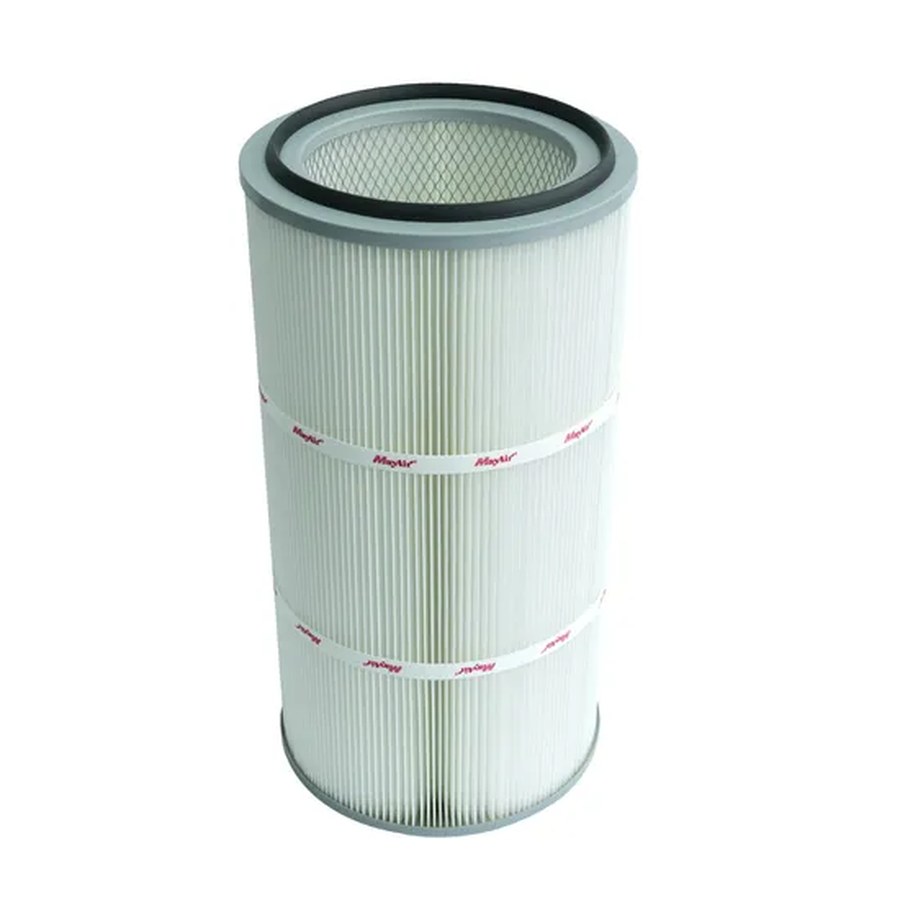
A HEPA class filter, because the particle sizes MDF produces are exactly what a coarse bag passes straight through.
 Check price on Amazon
JET AFS-1000B ceiling cleaner$660
Ambient filtration for what the collector misses, which with sheet goods on a track saw is a lot.
 Check price on Lee Valley
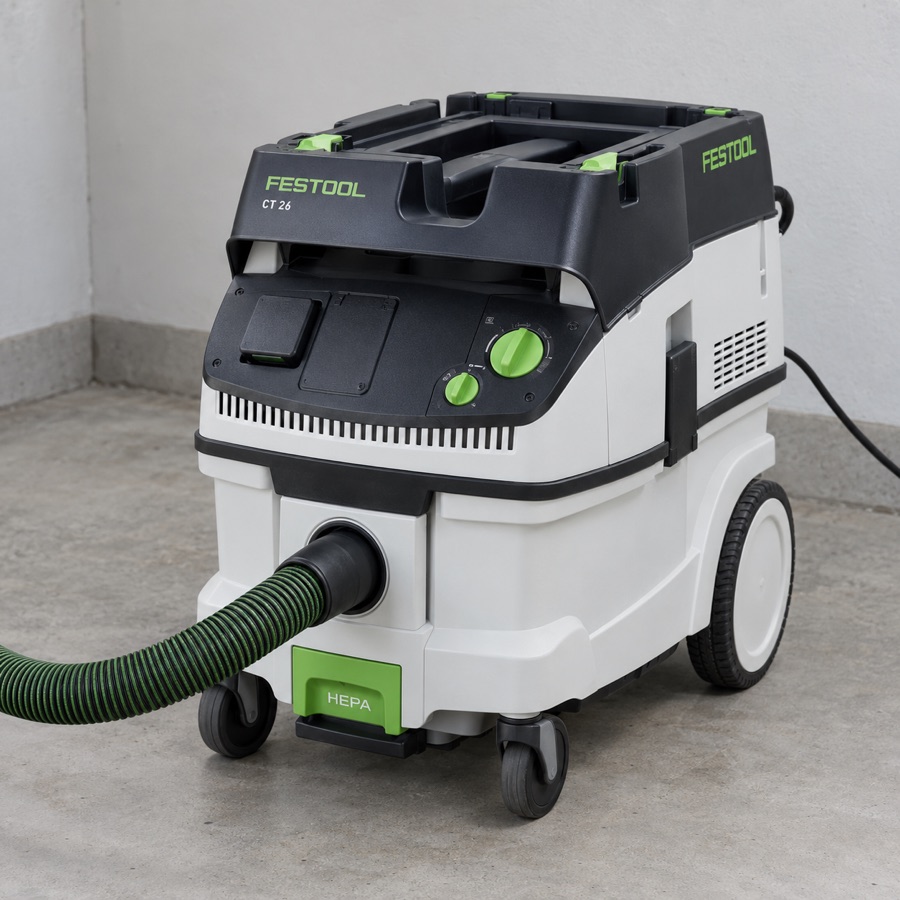
A HEPA extractor at the tool is the single biggest improvement for cutting and sanding sheet goods.
FAQ
Is MDF dust worse than regular sawdust?
It adds formaldehyde from the resin on top of the wood dust, and research reviewed in the Journal of Wood Science reports that sanding MDF makes more respirable dust than sanding solid wood. Both wood dust and formaldehyde are IARC Group 1 carcinogens, so treat MDF dust with at least as much care as hardwood dust.
Does an N95 protect against MDF dust?
A NIOSH-approved N95 that seals to your face filters at least 95% of particles, including MDF dust. It does not filter formaldehyde gas, so pair it with good ventilation. A half-mask with P100 filters gives a better seal for long sessions.
Is it safe to cut MDF indoors?
It can be done with the risk kept low if you capture dust at the tool, ventilate the shop, run an air cleaner, and wear a respirator. Without those controls, fine dust and formaldehyde build up in a closed garage quickly.
Is formaldehyde-free MDF safe to sand?
NAF boards remove added formaldehyde from the binder, but you still make fine wood fiber dust, which IARC classifies as carcinogenic. Use the same collection and respirator habits.