By Martin Harris.
How to Clean a Dust Collector Filter
On a canister collector, turn the collector off and spin the cleaning handle so the paddles knock dust off the pleats and into the lower bag, then empty the bag. On a bag collector, tap or shake the filter bag with the collector off. When that stops bringing your suction back, take the filter outside, put on a respirator, and clean it from the outside with a shop vac or with compressed air at the pressure your filter's maker allows. Only wash a filter if the maker says you can.
Before you start
Cleaning a filter releases the finest dust your collector has caught. That is the dust you bought the filter to keep out of your lungs, so treat this job as one of the dustiest in the shop.
- Turn off and unplug the collector. Remote switches can be bumped, and paddles and bags should never move with the blower running.
- Wear a NIOSH-approved respirator. Bill Pentz, whose research much of this hobby relies on, puts on a dual cartridge respirator before he cleans his filter. An N95 is the minimum.
- Wear safety glasses. Dust and grit come off fast, especially with compressed air.
- Read your filter's manual. Makers give different limits for air pressure and washing. Their instructions come first.
- Have a trash bag ready. Pentz slips a plastic garbage bag over his filter to carry it outside without shedding dust through the shop.
Routine cleaning: canister with a paddle handle
Many canister collectors, including Grizzly and Shop Fox models, have a handle on top of the canister. Turning it spins paddles inside that knock caked dust off the pleats. This is the quick clean you do often.
- Finish your work session and turn the collector off.
- Wait a minute or two so the dust inside settles.
- Turn the handle slowly for several full turns. You should hear dust falling.
- Tap the side of the canister lightly with your hand to free any clumps.
- Wait again so the fine dust settles into the lower bag.
- With your respirator on, release the lower bag clamp, twist the bag closed, and remove it.
- Tie the bag shut before you carry it out, and install a fresh bag with the clamp fully seated.
Routine cleaning: felt or cloth bag
- Turn the collector off and let the dust settle.
- Tap the outside of the filter bag all the way around with an open hand, working from the top down.
- Give the bag a gentle shake from the top so the dust cake falls into the lower bag.
- Wait for the dust to settle, then remove and seal the lower bag with your respirator on.
- Check the clamp band on the filter bag. A loose band leaks fine dust no matter how clean the bag is.
Deep cleaning with a shop vac
When the handle or a shake no longer brings suction back, the fine dust is packed deep in the media. Vacuuming the outside of the filter is the gentlest deep clean. The UK's Health and Safety Executive (HSE) recommends HEPA-filtered vacuums over compressed air for cleaning up wood dust, since vacuuming holds the dust instead of throwing it into the air.
- Take the filter outside in a bag, or clean it in place with the shop door open and fresh air moving.
- Use a shop vac with a fine or HEPA-rated filter. A vac with a basic filter can blow the finest dust right out its exhaust.
- Fit a soft brush attachment so the nozzle cannot scrape or tear the media.
- On a canister, run the brush slowly along the pleats from top to bottom on the outside. On a bag, work the brush over the outside in overlapping strips.
- Do not push the nozzle hard into the pleats. Bent or crushed pleats lose area.
- Empty the shop vac outdoors when you finish, with your respirator still on.
Deep cleaning with compressed air
Some filter makers tell you to use compressed air, and they give specific numbers. Wynn Environmental says to leave its woodworking filters in place and blow them from the outside with about 60 psi, so the dust drops into the lower bag. Oneida says its HEPA-grade cartridges can take up to 90 psi from the outside, with the nozzle kept at least 2 inches from the filter to avoid damaging the media. Those limits apply to those filters. Use the number your own filter's maker gives, and if they do not give one, start low.
The problem with compressed air indoors is simple. It blows the finest dust out of the filter and into the room, where it can hang in the air for a long time. For workplaces, OSHA's rule at 29 CFR 1910.242(b) says compressed air used for cleaning must be reduced to less than 30 psi, and used only with effective chip guarding and personal protective equipment. That rule is about protecting workers from air and flying debris. A home shop is not bound by it, but the reasons behind it still apply to you.
- Clean outdoors, away from open windows and doors, and stand upwind.
- Wear your respirator and safety glasses. Add hearing protection if your blow gun is loud.
- Set your regulator to the pressure your filter maker allows.
- Keep the nozzle at least a couple of inches from the media. Never touch the nozzle to the filter.
- Blow from the outside of the filter, moving along each pleat or across the bag in strips.
- Do not blow from the clean inside out through the media, unless your filter's instructions say to.
- Knock the loose dust out, bag it, and rinse or vacuum the area so kids and pets do not track it around.
Washing: follow the maker or skip it
Washing is where people ruin good filters. Wynn Environmental does not recommend washing its filters. Oneida says water is not recommended for cleaning its HEPA-grade cartridges. Pleated cartridges can lose their shape, and some media or coatings do not handle water well.
Felt bags vary more. Filter bag suppliers note that some bags can be hand washed and others cannot, because certain fabric treatments wash off. Washing also removes the dust cake, the thin layer of caught dust that helps a felt bag trap fine particles. If your bag's maker does allow washing, follow their water, soap, and drying directions exactly, and let the bag dry fully before it goes back on the collector.
A cleaning schedule for a small shop
There is no single right schedule, because it depends on how much you run the collector and whether a separator catches dust first. Wynn's advice is to clean when airflow at your hoods drops below an acceptable level. Here is the routine I suggest as a starting point:
| Task | When | Notes |
|---|---|---|
| Spin paddle handle or tap bag | End of each session | Collector off, let dust settle first |
| Empty lower bag or bin | Before it is full | Wynn advises emptying before the bag fills; a full bag backs dust into the filter |
| Check the separator bin | Every session | An overfilled separator sends dust straight to the filter |
| Deep clean outdoors | When routine cleaning stops restoring suction | Pentz describes cleaning his cartridge monthly |
| Inspect for holes and leaks | At every deep clean | Check clamp bands, gaskets, and seams too |
Sources: Wynn Environmental woodworking filter maintenance guidance; Bill Pentz, Dust Collection Research. Treat as a starting point and adjust to your shop.
Do not overdo it. Pentz notes that seasoned filters catch more fine dust than brand new ones, and that cleaning wears the media and makes it more porous. Clean enough to keep airflow up, and no more. If you want a number to go by, a differential pressure gauge (often called a Magnehelic gauge) across the filter shows resistance rising as dust loads and falling after a clean. A separator ahead of your collector also cuts cleaning a lot. See my dust separator picks if you do not have one yet.
When to replace the filter
- Holes, tears, or split seams. Replace right away. Dust takes the easy path through any opening.
- A dust film on the clean side or around the collector. Fine dust is getting through.
- Suction does not come back after a thorough clean. The media is blinded, meaning dust is packed in faster than cleaning can clear it.
- Crushed or collapsed pleats. Those folds no longer pass air.
- Your gauge says so. Pentz reports that people who monitor pressure replace filters when the reading after cleaning drops below the clean new reading, or when it sits 1 inch of water column below the highest seasoned reading.
A good cartridge can last years. Oneida says its cartridges can last up to 5 years with regular maintenance. A cheap woven bag may never filter well enough to be worth keeping. If you are replacing anyway, read canister filter vs bag filter first, then compare options in my best dust collector filters roundup.
If suction is still weak
A clean filter fixes a lot, but it is only one cause of poor airflow. A full bag, a clog in a flex hose, an open blast gate on another branch, or a leaky joint can all look like a dirty filter. My checklist for weak dust collector suction goes through them in order. For how filters, duct, and hoods work as one system, see my complete guide to small shop dust collection.
A reminder about your lungs
Filter cleaning and bag emptying are the two jobs where even a great dust collection system puts fine dust right in your face. Wear a respirator that seals to your face every time. My guide to respirators for woodworking dust explains N95 vs P100, fit, and facial hair.
Filters worth replacing with
Cleaning buys time. At some point the media is worn and a replacement is the honest fix.
 Check price on Amazon
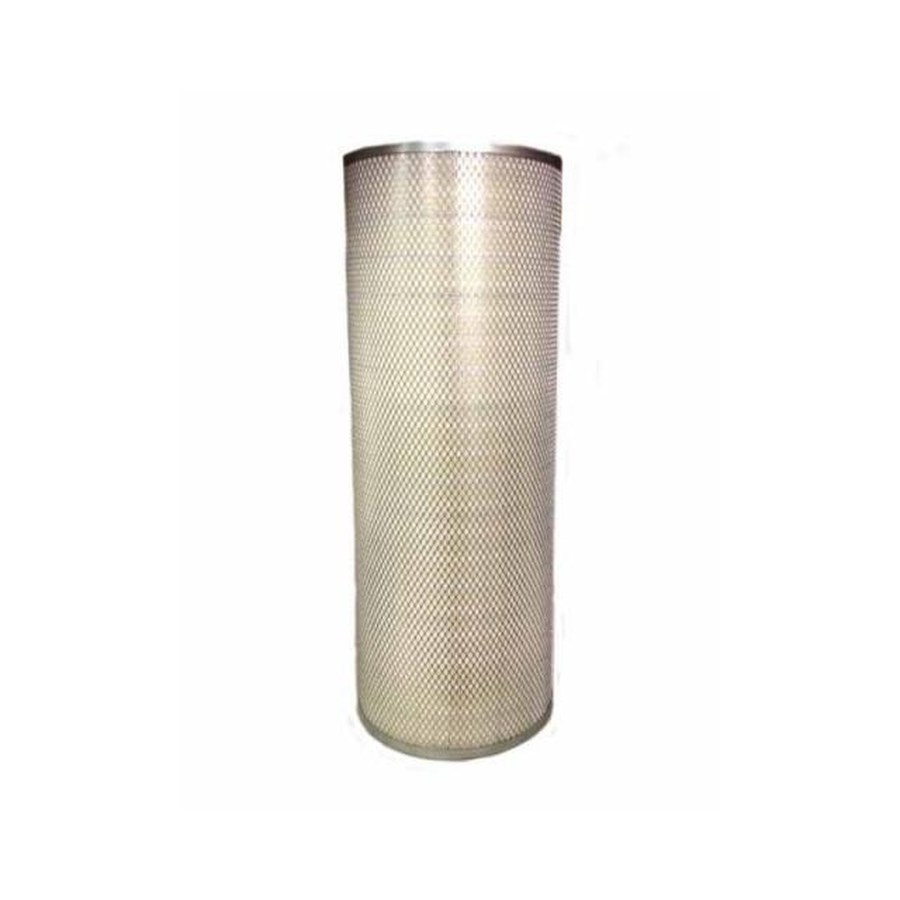
Wynn-style 0.5-micron cartridge$220
The usual upgrade from a stock bag, and the one that puts a single stage collector in the same range as a canister unit on fine dust.
 Check price on Amazon
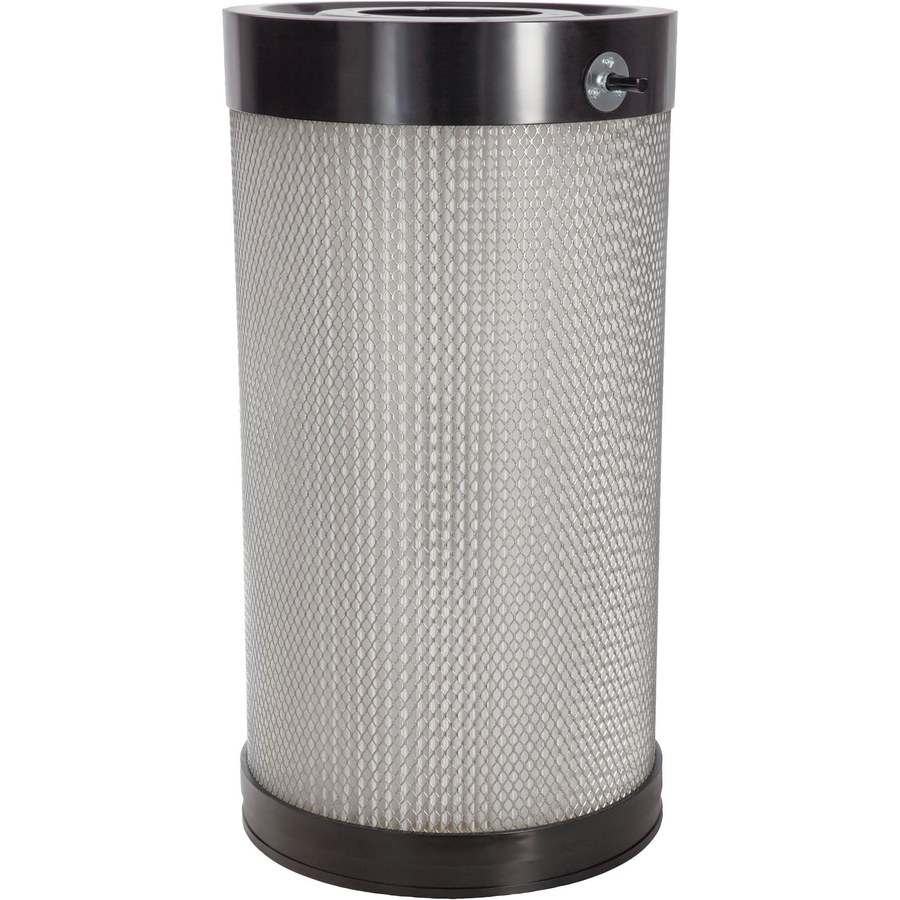
A pleated canister if you want more surface area without going to a cartridge.
 Check price on Amazon
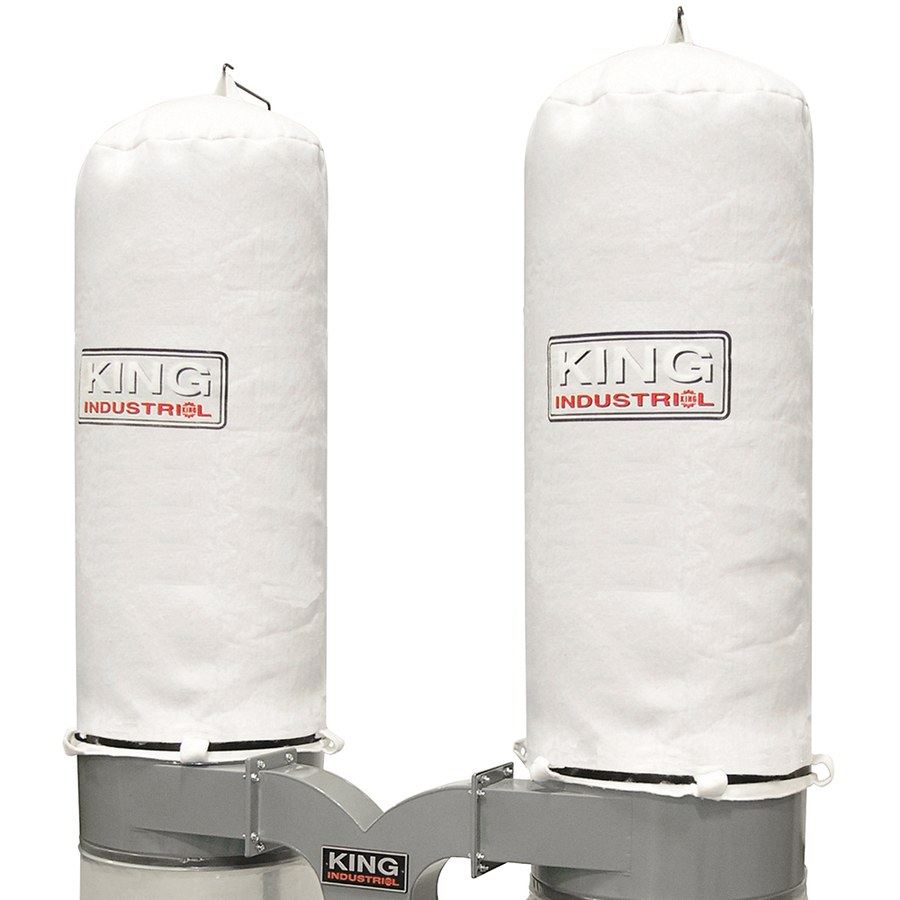
A straight like for like replacement if your current bag is simply worn out.
FAQ
Can I use compressed air to clean my dust collector filter?
Many makers allow it, with limits. Wynn says about 60 psi from the outside for its filters, and Oneida says up to 90 psi with the nozzle at least 2 inches away for its HEPA-grade cartridges. Do it outdoors with a respirator and safety glasses, and use your own filter maker's number.
Can you wash a dust collector filter?
Only if the maker says so. Wynn does not recommend washing its filters, and Oneida does not recommend water for its HEPA-grade cartridges. Some felt bags can be washed, but treatments can wash off, so check the instructions for your bag.
How often should I clean my dust collector filter?
Do a quick paddle or shake clean after each session, and a deeper clean when that stops restoring suction. Wynn advises cleaning when airflow at your hoods drops. Avoid cleaning more than needed, since cleaning wears the media.
Why does my filter still leave dust in the air after cleaning?
Look for leaks at the clamp band or gasket, holes in the media, and an overfilled lower bag. A freshly cleaned felt bag can also pass a little more fine dust until its dust cake rebuilds.