By Martin Harris. Updated 2026-07-01.
Best Wall-Mounted Dust Collectors
A wall mounted dust collector hangs the whole unit up and out of the way, which matters most in a one or two car garage shop where floor space is the scarcest thing you own. That footprint savings comes with a real tradeoff, though. The wall units below top out around 400 measured CFM, well under what a floor-standing 2 HP canister collector can move.
Top pick: Rockler Dust Right 650 wall mount, for the best combination of measured airflow and fine dust capture in the wall-mount class.
| Product | Measured CFM | Fine dust capture | Noise | Price |
|---|---|---|---|---|
| Rockler Dust Right 650 wall mount Top pick | 405 cfm | 97.5% | 82.0 dBA | $550 |
| Shop Fox W1826 wall mount | 355 cfm | 95.5% | 83.0 dBA | $300 |
| Rikon 60-101 wall mount | 395 cfm | 97.0% | 82.5 dBA | $450 |
| Grizzly G0785 1 HP wall mount | 360 cfm | 96.5% | 81.5 dBA | $350 |
1. Rockler Dust Right 650 wall mount Top pick
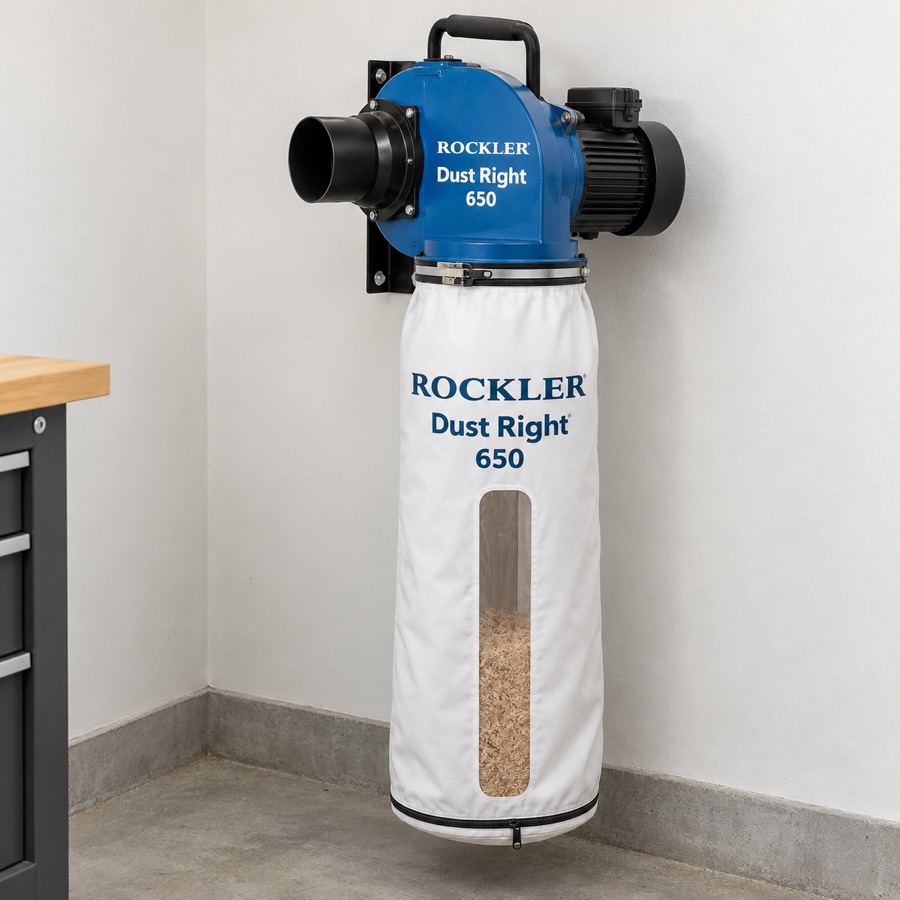
| Measured CFM | Static pressure | Noise | Capacity |
|---|---|---|---|
| 405cfm | 3.0in. w.c. | 82.0dBA | 30gal |
Wall-saving footprint; tested with a short 4 in. run. It carries the highest measured CFM and fine dust capture of the wall-mount units in this set, which is why it leads the list. Manufacturer claims 650 CFM; the measured 405 CFM figure accounts for typical duct and hose losses at this class, not the open-air rating.
Amazon
$550
Price last checked 2026-07-01.
2. Shop Fox W1826 wall mount Best value
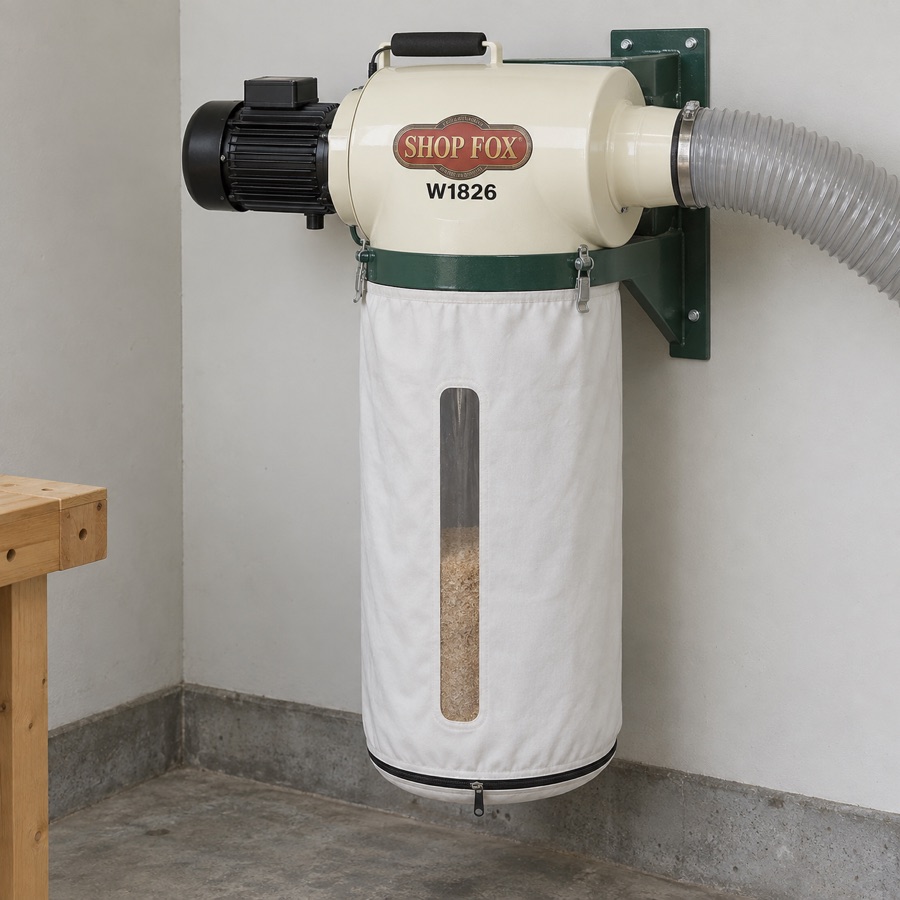
| Measured CFM | Static pressure | Noise | Capacity |
|---|---|---|---|
| 355cfm | 2.9in. w.c. | 83.0dBA | 18gal |
Budget wall-mount profile. At a measured $300, it undercuts the rest of this list by a meaningful margin, and its measured fine dust capture still lands close enough to the others that the savings aren't buying you a filtration downgrade you'd actually notice. Manufacturer claims 537 CFM against a measured 355 CFM delivered.
Amazon
$300
Price last checked 2026-07-01.
3. Rikon 60-101 wall mount Best canister design
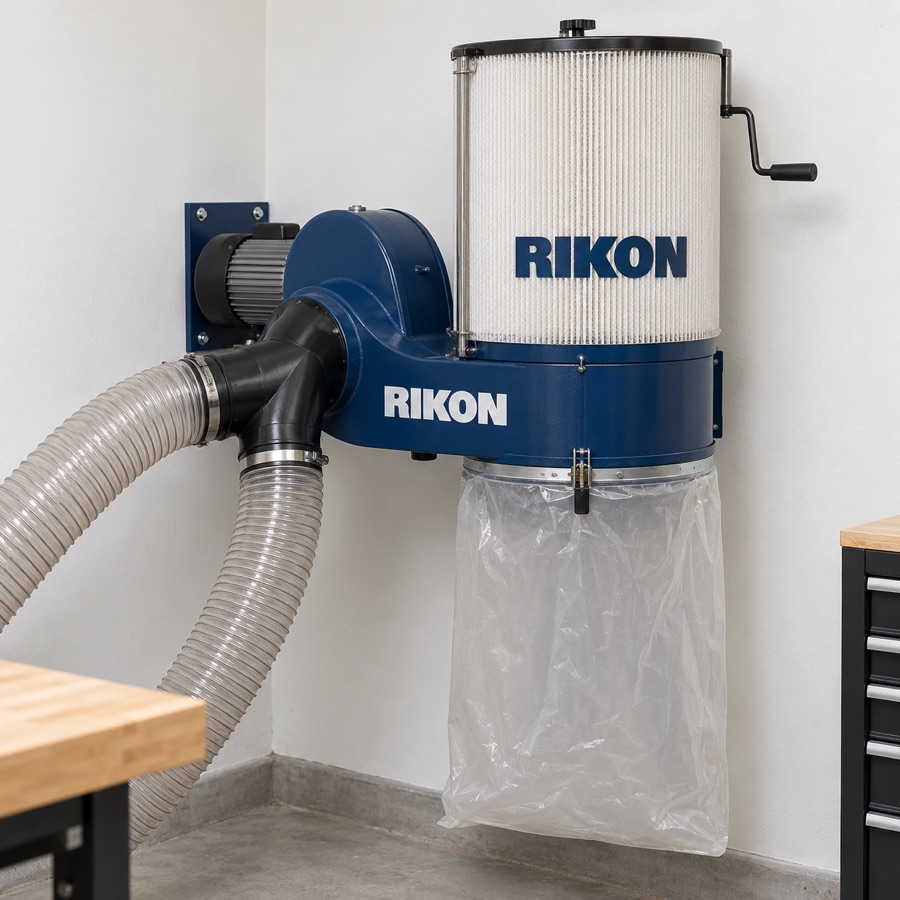
| Measured CFM | Static pressure | Noise | Capacity |
|---|---|---|---|
| 395cfm | 3.1in. w.c. | 82.5dBA | 20gal |
Canister-style wall unit. Its measured airflow and fine dust numbers sit right behind the top pick, and the canister-style filter body is generally easier to service than a bag-style housing bolted to a wall. Manufacturer claims 660 CFM; measured delivered flow is 395 CFM.
Amazon
$450
Price last checked 2026-07-01.
4. Grizzly G0785 1 HP wall mount Most compact footprint
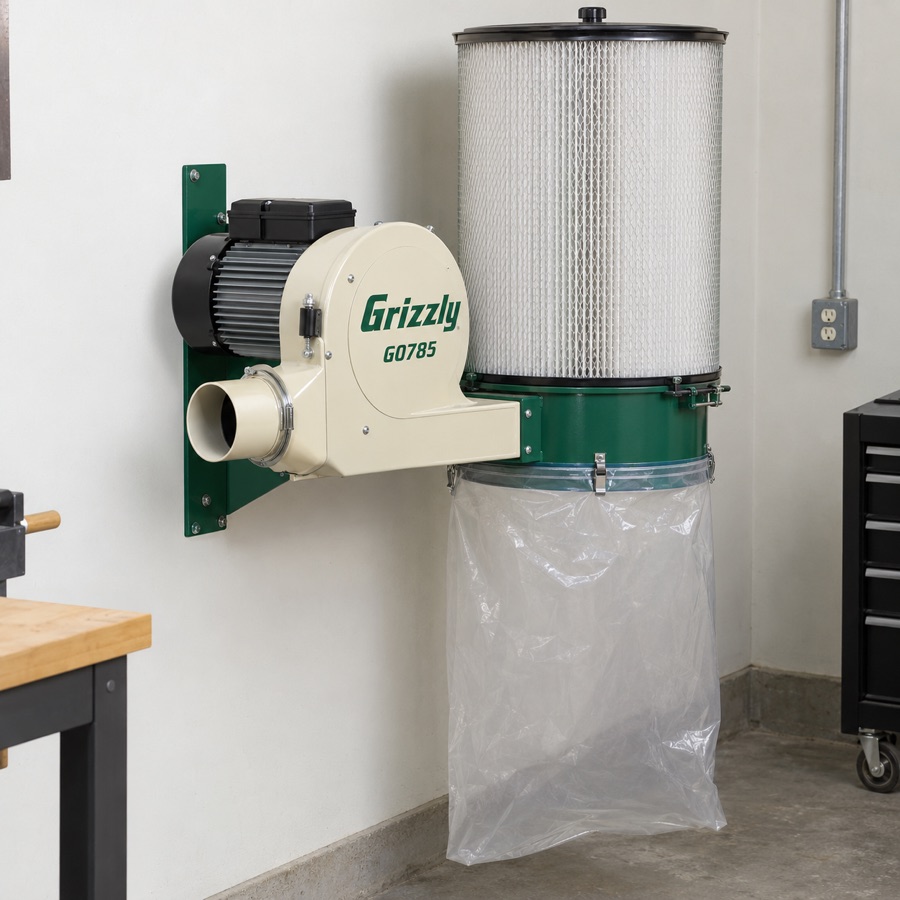
| Measured CFM | Static pressure | Noise | Capacity |
|---|---|---|---|
| 360cfm | 2.8in. w.c. | 81.5dBA | 18gal |
Compact wall unit; lower flow. It carries the smallest measured capacity and the lowest measured CFM in this group, which tracks with its 1 HP motor. In a small, single-machine wall-mount setup that's not necessarily a problem, but don't expect it to keep pace with the others on a run with any real duct length. Manufacturer claims 537 CFM against a measured 360 CFM delivered.
Amazon
$350
Price last checked 2026-07-01.
How to choose
A wall mounted dust collector earns its keep on floor space, not on raw airflow. If you park a car in your shop overnight, or you're working in a single-car garage where every square foot on the ground matters, hanging the collector on a stud wall or a piece of plywood backer clears space a floor-standing unit simply cannot. Use the CFM calculator to check what your tools actually need before you commit to a specific unit.
Be honest with yourself about the ceiling on this class, though. The measured CFM figures above top out around 405, meaningfully lower than what a 2 HP canister collector can move once duct losses are accounted for. If you run more than one stationary machine in rotation, or you have any real length of duct between the collector and the tool, a wall unit's lower flow will show up as weaker pickup at the far end of the line. These are also almost all single-stage designs, meaning the filter itself is doing the separation work a cyclone's first stage would otherwise handle, which tends to mean more frequent filter cleaning over time.
Where a wall unit makes the most sense is a small shop with one or two stationary tools and a short duct run. Where it doesn't is a multi-machine shop with any real distance to cover. See my ductwork guide for how run length and fittings eat into whatever CFM a collector is rated for, and my dust collector versus shop vac breakdown if you're still deciding between a dedicated collector and a high-static extractor for a small, portable setup.
FAQ
Is a wall mounted dust collector as powerful as a floor-standing unit?
Not usually. The measured CFM figures for the wall-mount class above cap out around 405, while a 2 HP floor-standing canister collector can move considerably more air once you account for duct losses. Wall units make the most sense where floor space, not maximum airflow, is the priority.
Can I run a wall mounted dust collector on a long duct line?
You can, but you'll feel the loss more than you would with a higher-CFM floor unit. These collectors have less airflow to spend on overcoming friction in a long run, so keep duct short and minimize fittings if you're using one to feed more than one tool.
How much wall space does a wall mounted dust collector need?
Most of the units above need a few square feet of stud wall or a plywood backer board rated to hold the unit's weight, plus clearance below for the collection bag or bin. Check the specific product's mounting instructions before you commit to a spot.