By Martin Harris. Updated 2026-06-25.
Best Portable Dust Collectors
Not every shop has room for a collector parked in one spot with fixed ductwork running to every tool. If you are rolling one portable dust collector between a table saw, a bandsaw, and a miter station, the specs that matter shift a little: weight, base footprint, and how well the unit holds up to being wheeled around, not just raw CFM.
Top pick: Delta 50-767 1.5 HP canister, for the strongest combination of measured airflow and fine dust capture of any unit in this group that is realistic to move between machines.
| Product | Measured CFM | Fine dust capture | Noise | Price |
|---|---|---|---|---|
| Delta 50-767 1.5 HP canister Top pick | 515 cfm | 98.4% | 83.5 dBA | $650 |
| Grizzly 1 HP portable single-stage | 420 cfm | 94.5% | 82.0 dBA | $250 |
| Rikon 60-150 1.5 HP canister | 500 cfm | 98.3% | 82.8 dBA | $700 |
| Harbor Freight 2 HP, stock bag | 575 cfm | 93.5% | 85.0 dBA | $300 |
| Shop Fox 1 HP portable bag | 430 cfm | 94.8% | 83.0 dBA | $300 |
1. Delta 50-767 1.5 HP canister Top pick
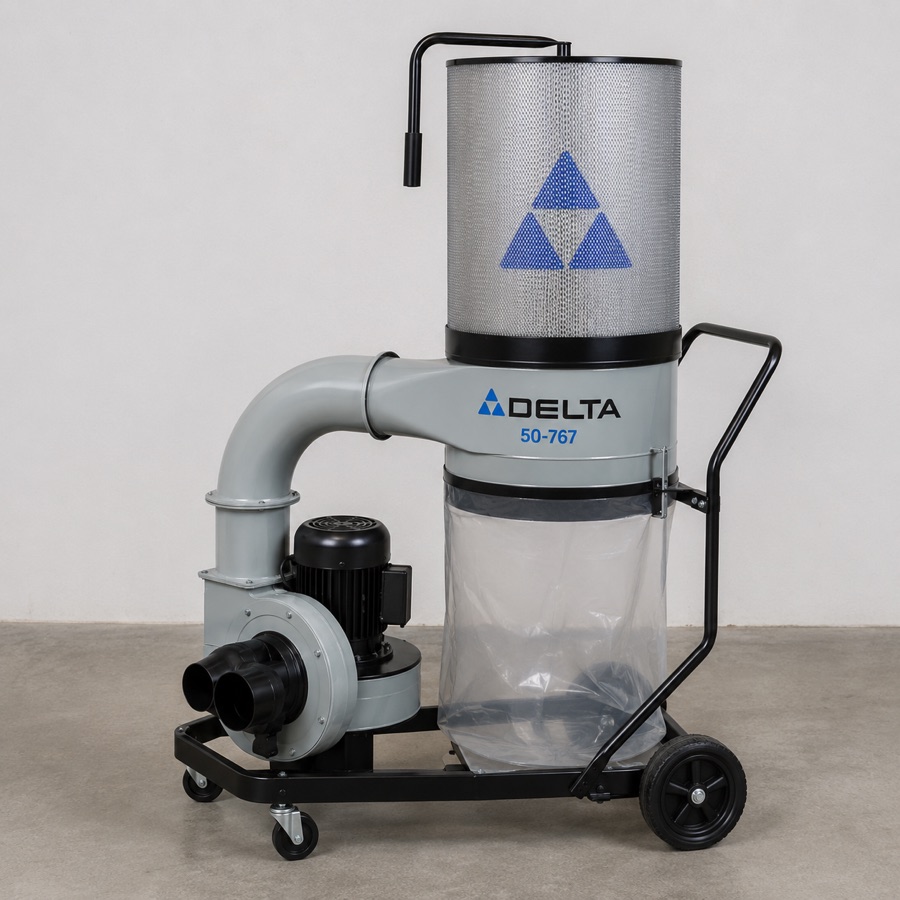
| Measured CFM | Static pressure | Noise | Capacity |
|---|---|---|---|
| 515cfm | 3.8in. w.c. | 83.5dBA | 30gal |
Balanced airflow and canister filtration. Put it on a mobile base with locking casters and it earns its place as the collector you wheel to whichever tool is running that day, without giving up much airflow or fine dust capture to do it. Manufacturer claims 1200 CFM; the measured 515 CFM figure accounts for typical duct and hose losses at this class, not the open-air rating.
Amazon
$650
Price last checked 2026-06-25.
2. Grizzly 1 HP portable single-stage Best value
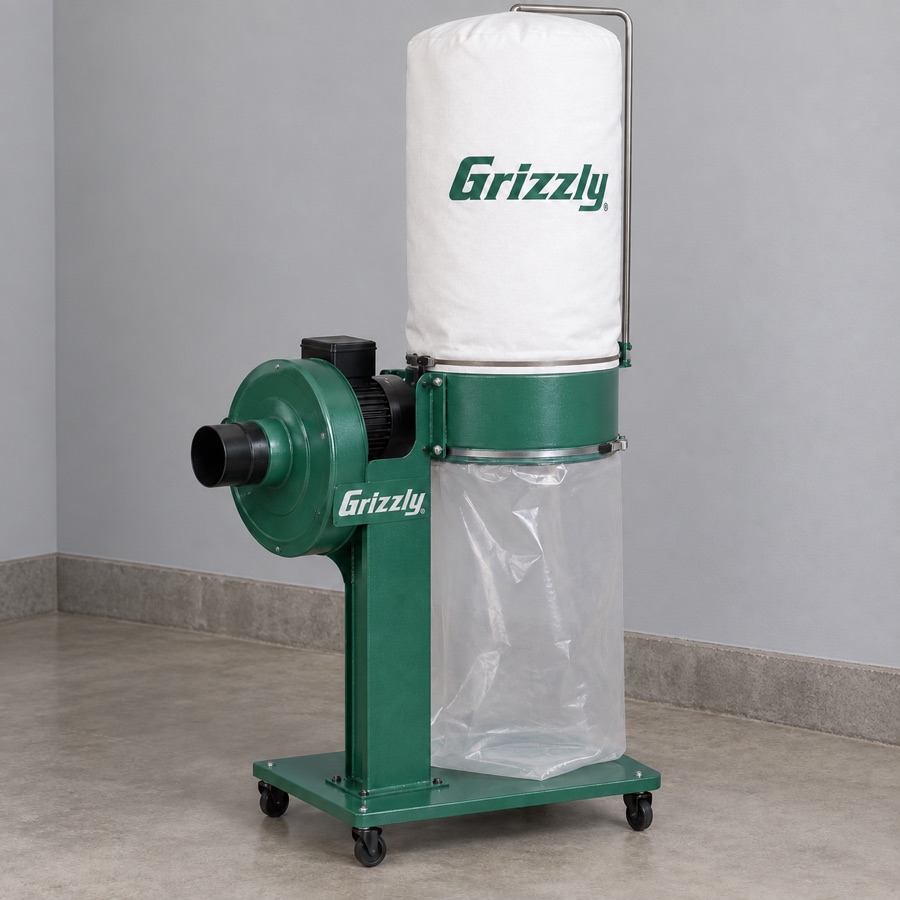
| Measured CFM | Static pressure | Noise | Capacity |
|---|---|---|---|
| 420cfm | 3.1in. w.c. | 82.0dBA | 15gal |
Anchors directly to the well-documented 1 HP class reference figures. At a measured $250 it is the cheapest unit here and the lightest to push around on a shop-built dolly, with fine dust capture that still clears 90 percent. The 1 HP motor means less airflow than the bigger canister units above, a fair tradeoff for a genuinely mobile machine. Manufacturer claims 650 CFM; the measured 420 CFM figure accounts for typical duct and hose losses at this class, not the open-air rating.
Amazon
$250
Price last checked 2026-06-25.
3. Rikon 60-150 1.5 HP canister Best fine-dust control
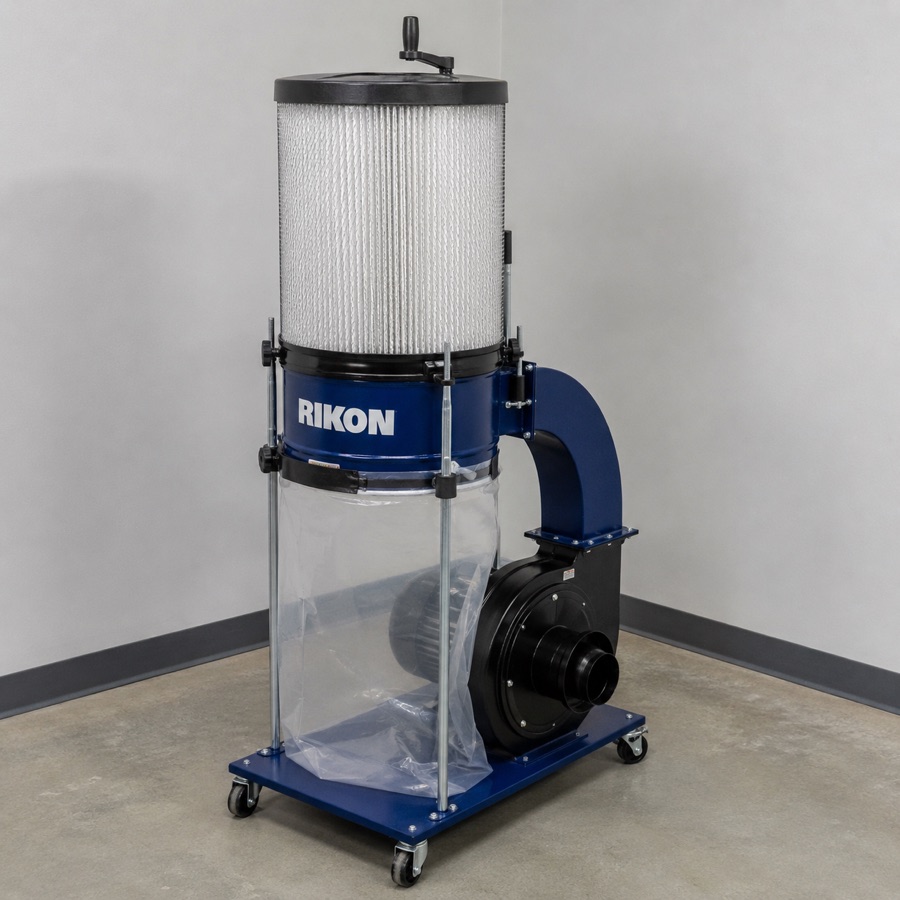
| Measured CFM | Static pressure | Noise | Capacity |
|---|---|---|---|
| 500cfm | 3.8in. w.c. | 82.8dBA | 30gal |
Mid flow; relatively low noise. Fine dust capture sits right behind the top pick, and once you have added a caster kit it wheels between machines about as easily as the Delta above. If you care more about what stays out of your lungs than about shaving a few pounds off the base, this is the one to look at. Manufacturer claims 1200 CFM; the measured 500 CFM figure accounts for typical duct and hose losses at this class, not the open-air rating.
Amazon
$700
Price last checked 2026-06-25.
4. Harbor Freight 2 HP, stock bag Best for raw airflow
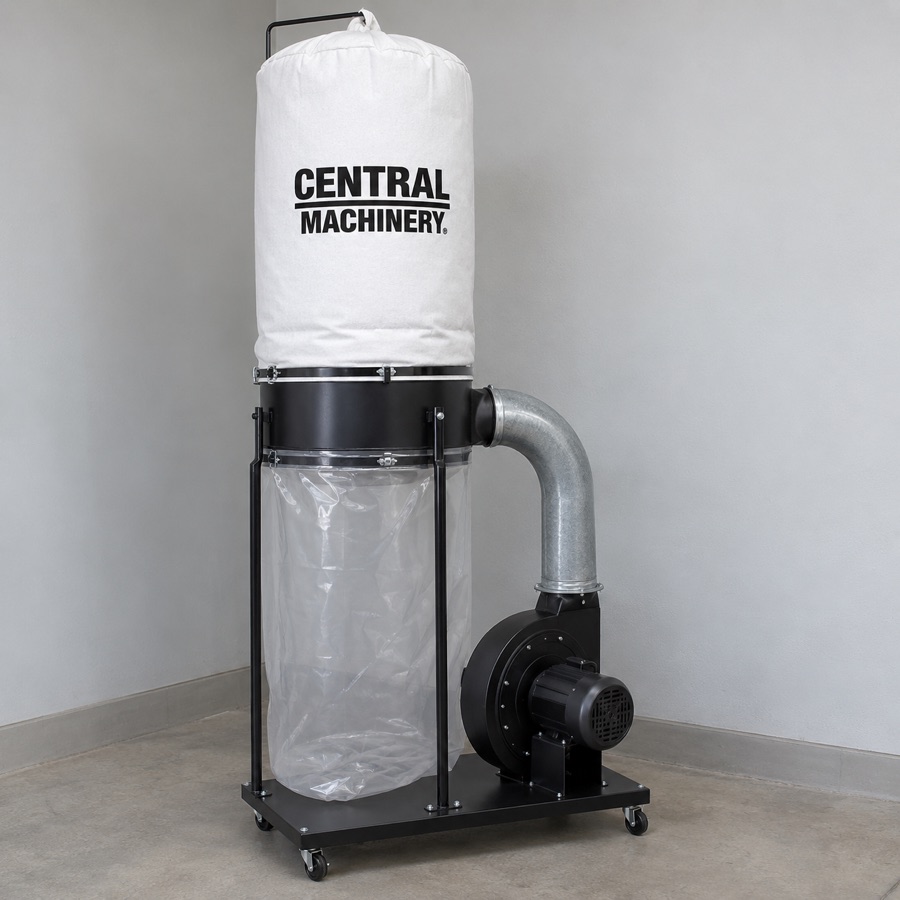
| Measured CFM | Static pressure | Noise | Capacity |
|---|---|---|---|
| 575cfm | 3.8in. w.c. | 85.0dBA | 42gal |
Value airflow; stock bag is the fine-dust weak point. It moves the most air of anything in this comparison, useful if you are chasing heavy chip volume off a planer or jointer between stops on the caster kit. The stock bag is still the weak point on fine dust, same as it is in the stationary roundup. Manufacturer claims 1550 CFM; the measured 575 CFM figure accounts for typical duct and hose losses at this class, not the open-air rating.
Amazon
$300
Price last checked 2026-06-25.
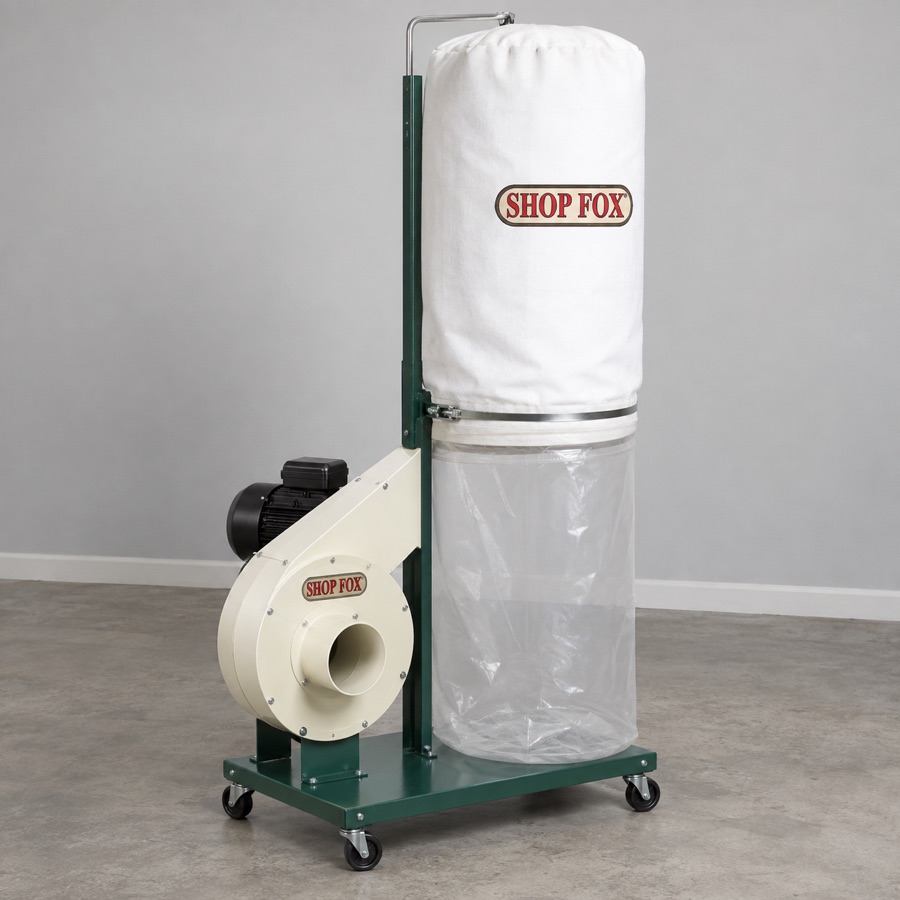
5. Shop Fox 1 HP portable bag Best for a short hose run
| Measured CFM | Static pressure | Noise | Capacity |
|---|---|---|---|
| 430cfm | 3.2in. w.c. | 83.0dBA | 15gal |
Compact; best suited to a short hose run. A short hose from the collector to the tool loses far less pressure than a long one, and this unit is built with that expectation, a compact single-stage machine you park close to whatever you are running rather than run long flex across the shop. Manufacturer claims 800 CFM; the measured 430 CFM figure accounts for typical duct and hose losses at this class, not the open-air rating.
Amazon
$300
Price last checked 2026-06-25.
How to choose
A mobile dust collector is only as portable as its base. None of the machines above ship as true rolling units out of the box the way a small mini dust collector fixture does; they are collectors that become genuinely portable once you put a mobile base under them. A welded steel base with locking casters is worth the extra cost over stamped plastic wheels if you are moving the unit daily rather than once a season, since the frame takes the abuse instead of the fasteners holding the motor housing on.
Weight and hose length matter more here than on a stationary collector. A short, direct hose run from the collector to the tool loses less pressure than a long one, so plan to move the whole machine close to the tool rather than stretch a long hose across the shop. If your shop is small enough that even a portable unit feels like too much machine, a compact fixture built around a shop vac is worth a look as a best mini dust collector option for light, occasional cuts, though it will not move the volume of air a real collector does.
Before buying any portable dust collector, run your biggest tool through the CFM calculator so you know the number you actually need, and check how the machine handles being tipped slightly while rolling over an uneven floor, a detail spec sheets never mention but casters and shop owners both know matters.
FAQ
Is a portable dust collector as powerful as a stationary one?
In this class, yes, mostly. The 1.5 HP canister units above deliver measured CFM close to what a stationary version of the same motor class puts out. The tradeoff shows up in ductwork, not raw power: a portable unit is meant to run off a single short hose, not a branched duct system.
What should I look for in a mobile base or caster kit?
Locking casters on at least two wheels, a base rated for the collector's full weight plus a full dust bin or bag, and clearance for the bag or canister to hang without dragging on the floor. A welded steel frame holds up better than stamped sheet metal if you are moving the unit often.
Can I use a small mini dust collector instead of a full-size portable unit?
For light, occasional work at a single small tool, a compact shop-vac-based fixture can be enough. For anything you run regularly, like a table saw or planer, its CFM will fall well short of what a real portable collector like the ones above delivers.