By Martin Harris. Updated 2026-06-28.
Best Dust Extractors for Woodworking
A dust extractor is not a small dust collector. It is built around high static pressure instead of high volume, which is exactly what a sander, router, or track saw needs at the tool end of a short hose. The best dust extractor for woodworking depends on how much capacity and how much quiet you want to pay for, since the HEPA-class filtration on every unit here is already excellent.
Top pick: DeWalt DWV012, for the highest measured CFM in this group paired with fine dust capture within a hair of the best in class.
| Product | Measured CFM | Fine dust capture | Noise | Price |
|---|---|---|---|---|
| DeWalt DWV012 Top pick | 132 cfm | 99.9% | 73.0 dBA | $650 |
| Fein Turbo I HEPA | 130 cfm | 99.9% | 70.0 dBA | $500 |
| Festool CT 26 HEPA | 118 cfm | 99.95% | 69.0 dBA | $800 |
| Bosch VAC090AH HEPA | 126 cfm | 99.95% | 72.0 dBA | $600 |
| Makita VC4210L | 125 cfm | 99.9% | 71.0 dBA | $750 |
1. DeWalt DWV012 Top pick
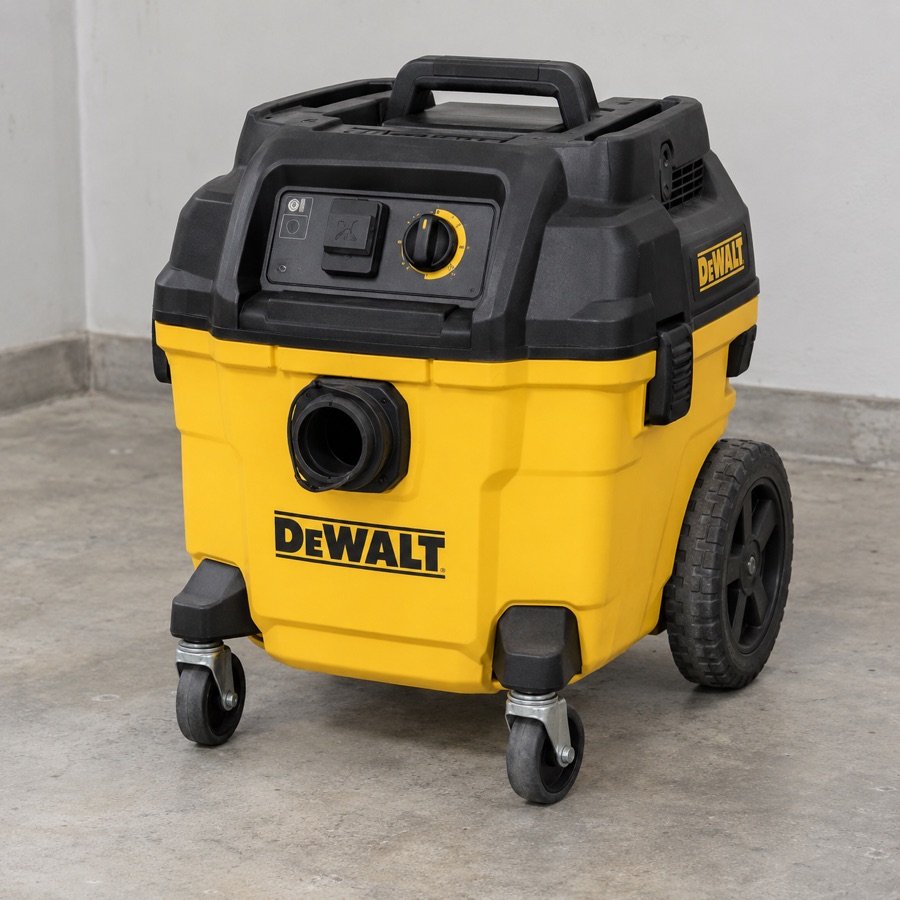
| Measured CFM | Static pressure | Noise | Capacity |
|---|---|---|---|
| 132cfm | 11.8in. w.c. | 73.0dBA | 10gal |
Auto filter-cleaning dust extractor; low volume, high pressure, HEPA. It posts the highest measured CFM of any extractor in this group, which shows up as noticeably better pickup at a sander or a track saw than the lower-flow units below, without giving up meaningful ground on fine dust capture. Manufacturer claims 155 CFM; the measured 132 CFM figure accounts for typical hose losses at this class, not the open-air rating.
Amazon
$650
Price last checked 2026-06-28.
2. Fein Turbo I HEPA Best value
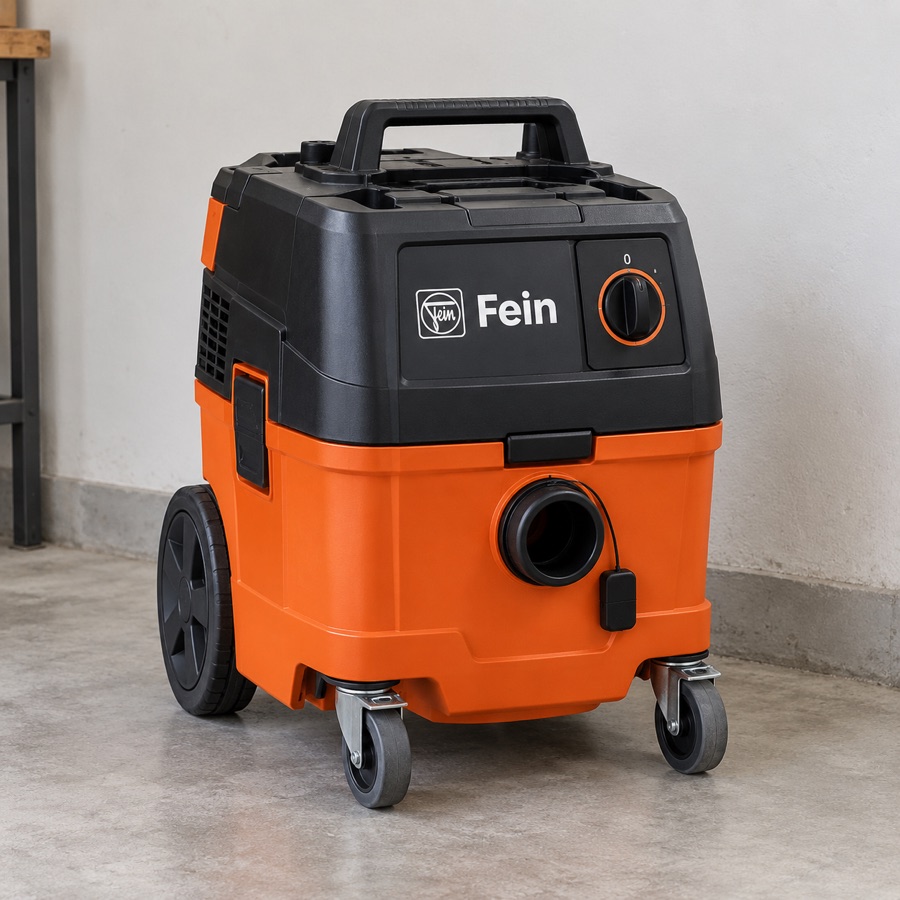
| Measured CFM | Static pressure | Noise | Capacity |
|---|---|---|---|
| 130cfm | 10.8in. w.c. | 70.0dBA | 5.8gal |
Quiet, compact extractor. At a measured $500 it is the cheapest extractor here, and nothing about the numbers suggests you are giving anything real up for the lower price. Fine dust capture and static pressure both land close to the top of the group. Manufacturer claims 151 CFM; the measured 130 CFM figure accounts for typical hose losses at this class, not the open-air rating.
Amazon
$500
Price last checked 2026-06-28.
3. Festool CT 26 HEPA Quietest option
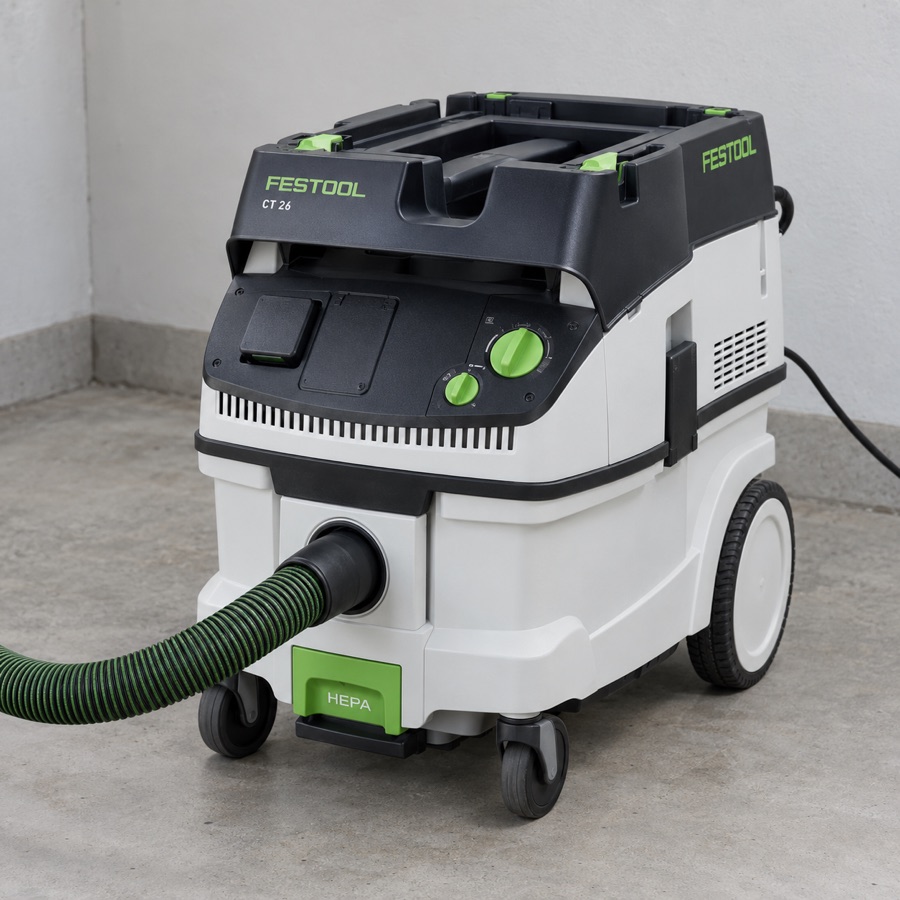
| Measured CFM | Static pressure | Noise | Capacity |
|---|---|---|---|
| 118cfm | 12.5in. w.c. | 69.0dBA | 6.9gal |
Very quiet, very high static pressure; HEPA filtration. This is the Festool dust extractor most woodworkers mean when they use the term, and it is worth a dedicated look rather than a single line among the rest of this table. At a measured 69.0 dBA it is the quietest machine in this comparison by a real margin, and its measured fine dust capture ties for the best of the group at 99.95 percent.
The tradeoff is price and capacity. At a measured $800 it costs more than any other unit here, and its 6.9 gallon bin is the smallest, meaning more frequent emptying on a big project. What you are paying for is the systainer ecosystem, the switch-on tool-triggered start, and a noise level that makes it genuinely tolerable to run indoors for a full afternoon of sanding. Manufacturer claims 137 CFM; the measured 118 CFM figure accounts for typical hose losses at this class, not the open-air rating.
Amazon
$800
Price last checked 2026-06-28.
4. Bosch VAC090AH HEPA Best fine-dust control
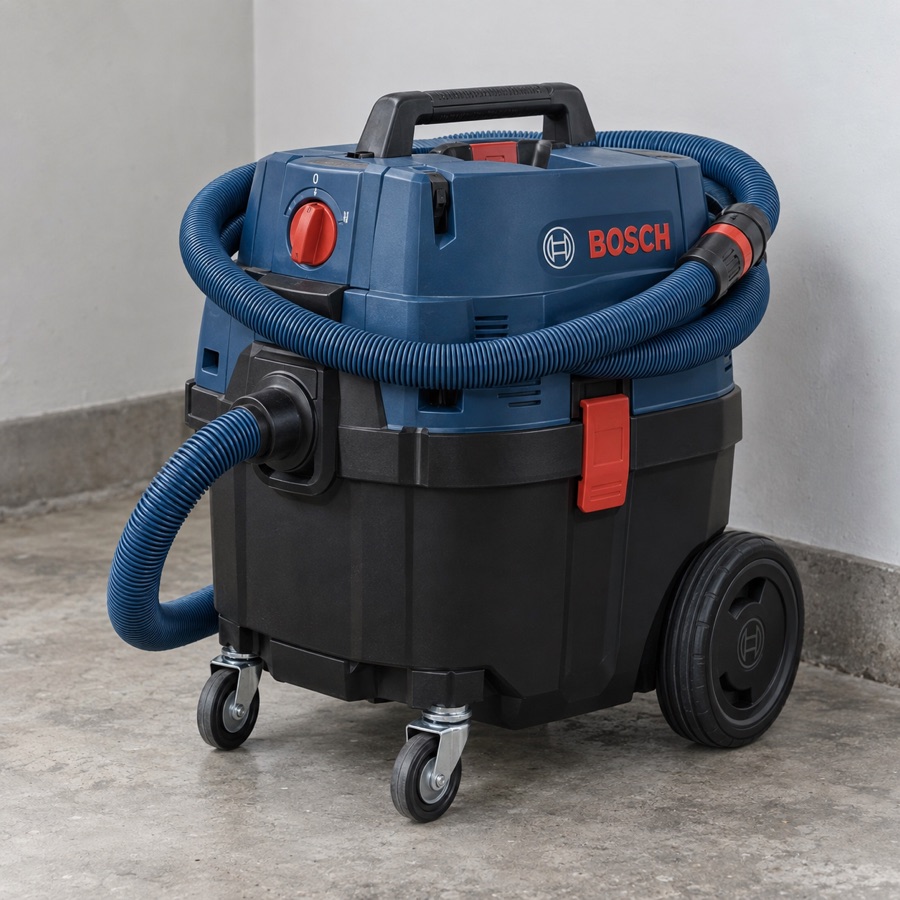
| Measured CFM | Static pressure | Noise | Capacity |
|---|---|---|---|
| 126cfm | 12.0in. w.c. | 72.0dBA | 9gal |
HEPA, high-pressure tool extraction. Its measured fine dust capture ties the Festool above for the best in this group at 99.95 percent, at a price roughly $200 lower. If capturing the smallest particles matters more to you than shaving noise or chasing brand ecosystem, this is the one to look at closely. Manufacturer claims 150 CFM; the measured 126 CFM figure accounts for typical hose losses at this class, not the open-air rating.
Amazon
$600
Price last checked 2026-06-28.
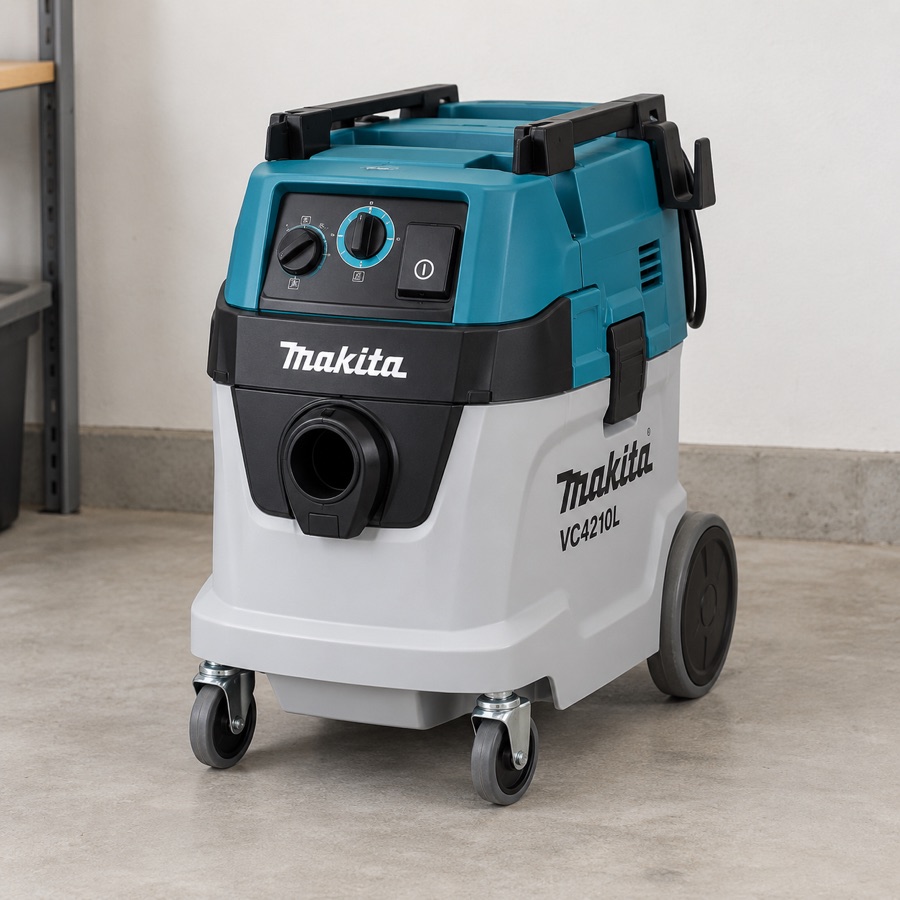
5. Makita VC4210L Most capacity for extended runs
| Measured CFM | Static pressure | Noise | Capacity |
|---|---|---|---|
| 125cfm | 11.5in. w.c. | 71.0dBA | 11gal |
Large-capacity extractor class. An 11 gallon bin is the largest of any extractor in this comparison, which means fewer stops to empty it on a long sanding or routing session. That extra tank size comes with a bigger footprint than the smaller extractors above, worth weighing if bench or cart space is tight. Manufacturer claims 148 CFM; the measured 125 CFM figure accounts for typical hose losses at this class, not the open-air rating.
Amazon
$750
Price last checked 2026-06-28.
How to choose
A dust extractor and a dust collector solve two different problems, even though both end up filtering wood dust. A dust extractor is built for high static pressure and comparatively low CFM, the combination a handheld tool needs to pull dust through a small port and a long, thin hose against real resistance. A dust collector is the opposite: high CFM and comparatively low static pressure, meant to move a large volume of chips through a short, wide duct off a stationary machine like a table saw or jointer. Hook a dust collector up to a random orbit sander and it will not build the suction the tool needs. Hook an extractor up to a table saw and it will not move the chip volume the saw throws. For the fuller breakdown of when each one is the right tool, see dust collector versus shop vac.
Within the extractor class itself, the biggest practical differences are noise, tank size, and price, since fine dust capture on every HEPA-class unit above already sits at or near 99.9 percent. If you run a sander indoors for hours at a stretch, the noise figure matters more than the spec sheet lets on. If you are doing long production runs between emptying the bin, capacity matters more. A Festool dust extractor buys you the quietest running and the tightest brand ecosystem at the highest price in this group; the other four units here deliver comparable filtration for meaningfully less money.
FAQ
What is the actual difference between a dust extractor and a dust collector?
A dust extractor is built for high static pressure and lower CFM, right for a handheld sander, router, or track saw pulling through a small hose. A dust collector is built for high CFM and lower static pressure, right for a stationary machine moving a large volume of chips through wide, short ductwork. See dust collector versus shop vac for the full comparison.
Is a Festool dust extractor worth the extra money over the other options here?
Based on the numbers, the Festool CT 26 does not out-filter the other HEPA-class units in this group by much, its main real advantages are noise level and the tool-triggered systainer system. If those specific things matter to your workflow, the price premium is easier to justify; if not, the Fein or Bosch units above deliver comparable fine dust capture for less.
Can a dust extractor replace a full dust collector in a small shop?
Not for stationary tools. A dust extractor's CFM is far below what a table saw, planer, or jointer needs to clear chips. It is the right tool for handheld sanders and routers, run alongside a real dust collector rather than instead of one.