By Martin Harris. Updated 2026-08-08.
Best 2 HP and 3 HP Dust Collectors
Once you're running more than one stationary machine off a single system, or you've got a run of duct longer than a one-car garage, a 1.5 HP collector starts to run out of gas. The units below step up to 2 HP and 3 HP motors, sized for a shop with a table saw, jointer, planer, and bandsaw all sharing one trunk line. Bigger horsepower doesn't automatically mean more air moving at the tool, that part depends on the whole system, and I get into why further down.
Top pick: Oneida 3 HP cyclone, for the strongest combination of measured delivered CFM and fine dust capture in this group, at a real cost and footprint premium suited to a central shop system rather than a single-machine upgrade.
| Product | Measured CFM | Fine dust capture | Noise | Price |
|---|---|---|---|---|
| Oneida 3 HP cyclone Top pick | 700 cfm | 99.7% | 85.8 dBA | $2000 |
| Shop Fox W1666 2 HP bag | 585 cfm | 95.2% | 85.5 dBA | $550 |
| Grizzly G0548ZP 2 HP canister | 610 cfm | 98.7% | 84.5 dBA | $725 |
| Laguna 2 HP cyclone | 590 cfm | 99.5% | 84.8 dBA | $1300 |
1. Oneida 3 HP cyclone Top pick
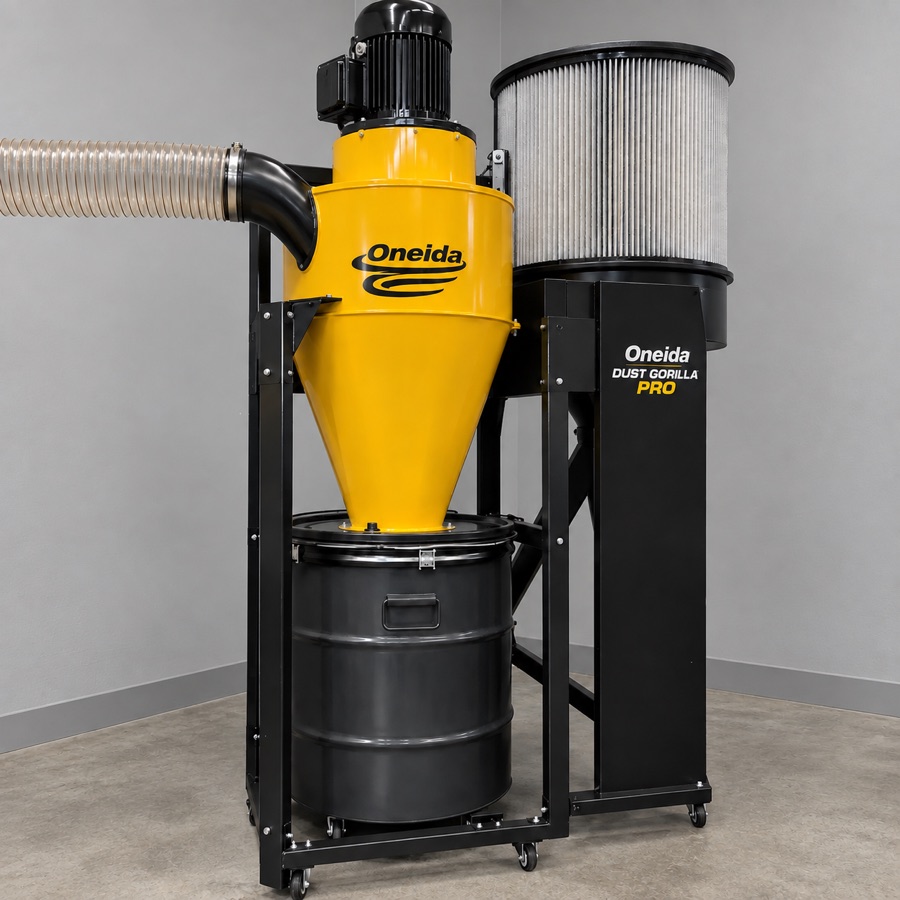
| Measured CFM | Static pressure | Noise | Capacity |
|---|---|---|---|
| 700cfm | 6.0in. w.c. | 85.8dBA | 55gal |
Higher-flow central-shop class; output shown is restricted by the test fixture, not the collector's ceiling. Manufacturer claims 2200 CFM; the measured 700 CFM figure accounts for typical duct and hose losses at this class, not the open-air rating.
Amazon
$2000
Price last checked 2026-08-08.
2. Shop Fox W1666 2 HP bag Best value
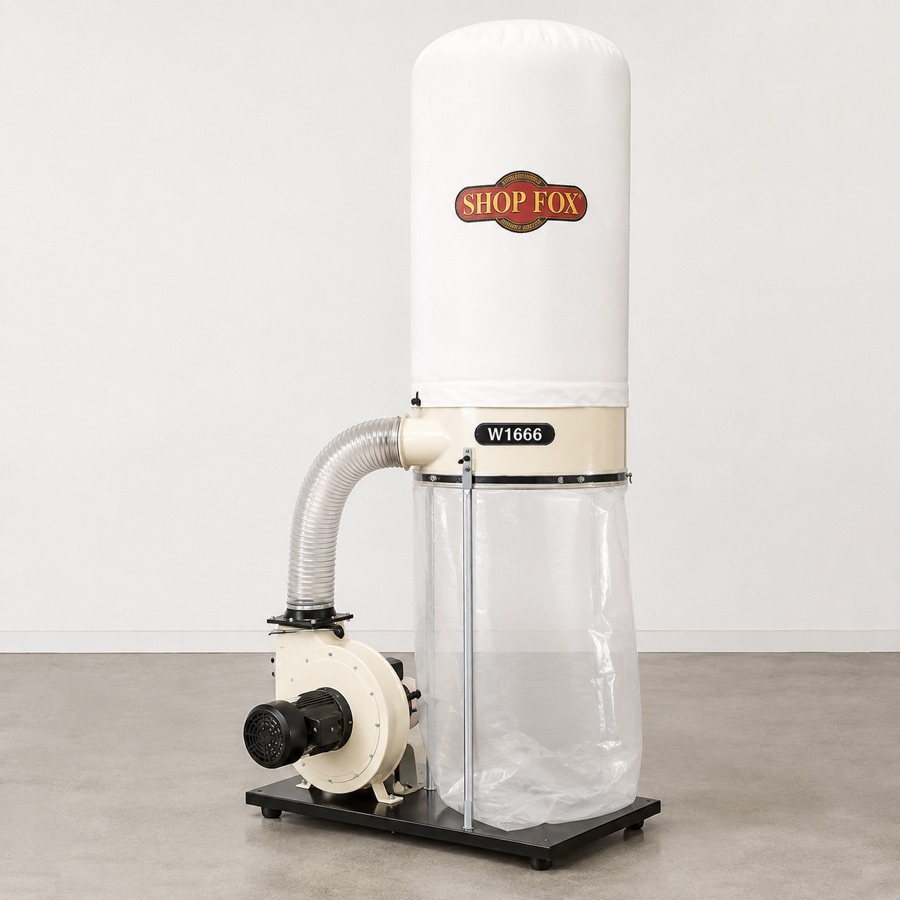
| Measured CFM | Static pressure | Noise | Capacity |
|---|---|---|---|
| 585cfm | 4.0in. w.c. | 85.5dBA | 42gal |
High chip-moving flow; bag leaks more fines. Manufacturer claims 1550 CFM; the measured 585 CFM figure accounts for typical duct and hose losses at this class, not the open-air rating.
Amazon
$550
Price last checked 2026-08-08.
3. Grizzly G0548ZP 2 HP canister Strongest 2 HP canister flow
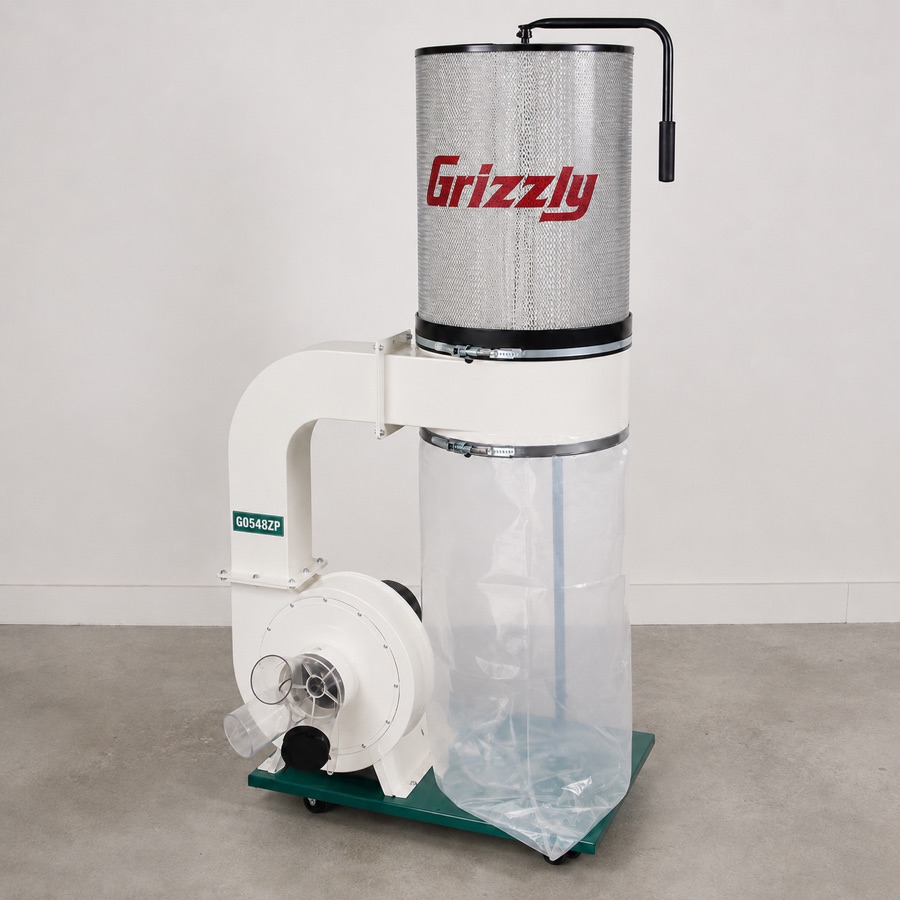
| Measured CFM | Static pressure | Noise | Capacity |
|---|---|---|---|
| 610cfm | 4.2in. w.c. | 84.5dBA | 42gal |
2 HP canister; strong flow, fine filter. Manufacturer claims 1550 CFM; the measured 610 CFM figure accounts for typical duct and hose losses at this class, not the open-air rating.
Amazon
$725
Price last checked 2026-08-08.
4. Laguna 2 HP cyclone Best fine-dust capture in the 2 HP class
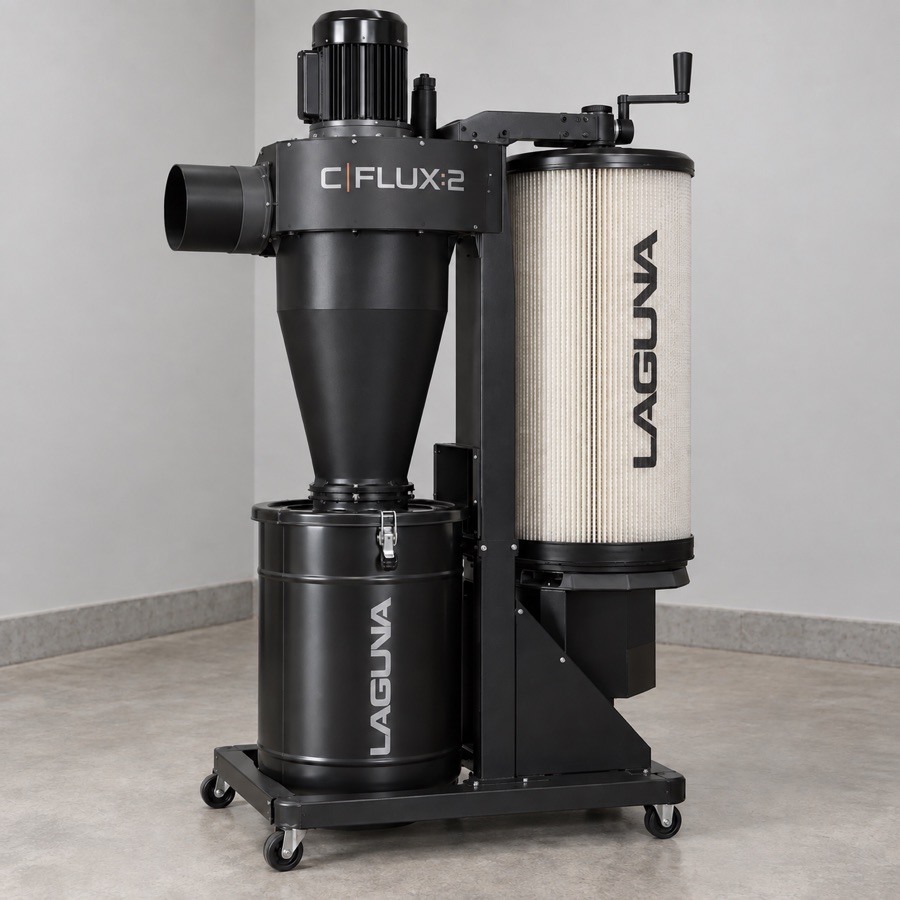
| Measured CFM | Static pressure | Noise | Capacity |
|---|---|---|---|
| 590cfm | 5.5in. w.c. | 84.8dBA | 46gal |
Two-stage 2 HP unit, fine-dust oriented. Manufacturer claims 1450 CFM; the measured 590 CFM figure accounts for typical duct and hose losses at this class, not the open-air rating.
Amazon
$1300
Price last checked 2026-08-08.
How to choose
Horsepower alone tells you almost nothing about how much air actually reaches your tool. A 3 HP motor bolted to a small impeller, feeding a long run of narrow, leaky duct, can move less usable air than a well-sized 1.5 HP unit on a short, tight run of 6 inch pipe. What determines delivered CFM is the whole system: duct diameter, duct length, the number of elbows and fittings, and the static pressure the motor has to work against to pull air through all of it. That's why the measured CFM figures above sit so far below the manufacturer's open-air claim, real duct and hose losses eat a large share of the rated airflow before it ever gets to a blast gate. Before you buy on horsepower alone, run the CFM calculator for your actual duct layout and your most demanding tool. If the number comes back well under what a 2 HP unit can deliver on your system, a bigger motor won't fix a duct problem, better duct sizing will.
As a rough guide: 2 HP suits a single-person shop running two or three stationary machines off a shared trunk line with a modest duct run. Step up to 3 HP when you're feeding a longer run, more branches, or you want headroom for a future tool without redesigning the whole system. That headroom costs real money and floor space, so size to your actual layout, not to the biggest number on the shelf.
FAQ
Is a 3 HP dust collector overkill for a one-person hobby shop?
For most one-person shops running one machine at a time, yes, a well-sized 1.5 HP or 2 HP unit will usually cover it. A 3 HP unit earns its keep when you've got a longer duct run, more branches, or you plan to run two dust-producing machines close together, like a table saw feeding directly into a jointer setup.
Does a bigger motor always mean more airflow at the tool?
No. Delivered CFM depends on the whole system, duct size, duct length, fittings, and the static pressure the motor has to overcome. A bigger motor helps most when the duct system is already sized well; bolt it onto an undersized, leaky duct run and you'll still lose most of the gain.
Should I size for my current tools or my future shop?
Size for your highest-demand tool today, then decide honestly whether a bigger central system is actually coming. If you know you're adding stationary machines within a year or two, the 3 HP class buys you real headroom. If not, a right-sized 2 HP unit will save you money and noise without leaving performance on the table.